
According to Merriam-Webster’s thesaurus, there are 63 synonyms for amazing. I’m not sure that’s even enough to truly capture how we felt about visiting the White Continent.
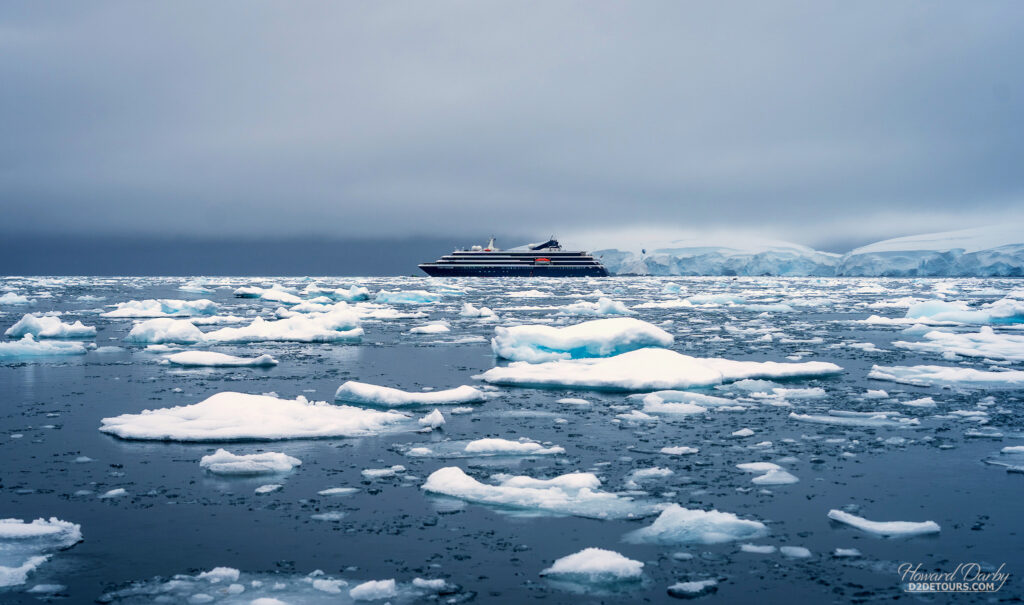
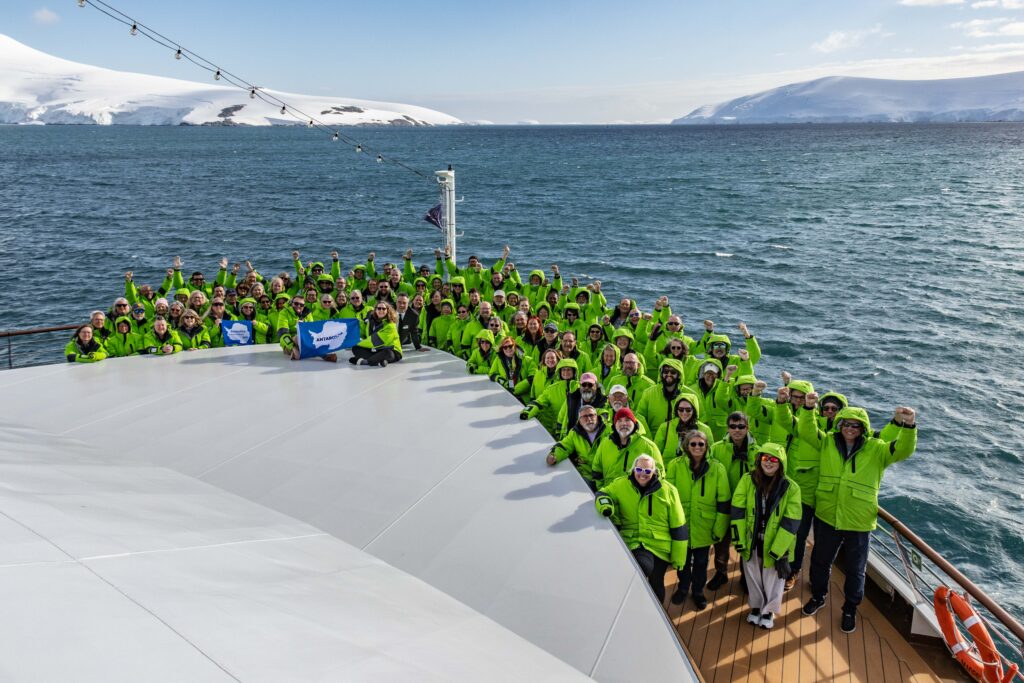
While we always thought a trip to the Antarctic, and actually setting foot on the continent, would be fascinating (that’s one of the 63 synonyms for amazing), it was never realistically on our radar – it is hideously expensive. Then Amy and Tim Rutherford, the creators behind one of our favourite Facebook resources (Go with Less), posted that they’d secured a “deal” with Altas Ocean Voyages, one of the expedition cruise lines operating in Antarctica, and wondered if anyone was interested in joining them on this adventure. Amy hoped she’d convince maybe five or ten people to sign up. Atlas ships accommodate 168 passengers on Antarctic expeditions; Amy booked passage for 119 people! We were not the only nomads who felt that, despite the still steep pricetag, this trip of a lifetime opportunity was too good to pass up. And we were not wrong. The experience was everything, and then some, that we hoped it would be – abundant wildlife, jaw-dropping landscapes, and even a little bit of history.
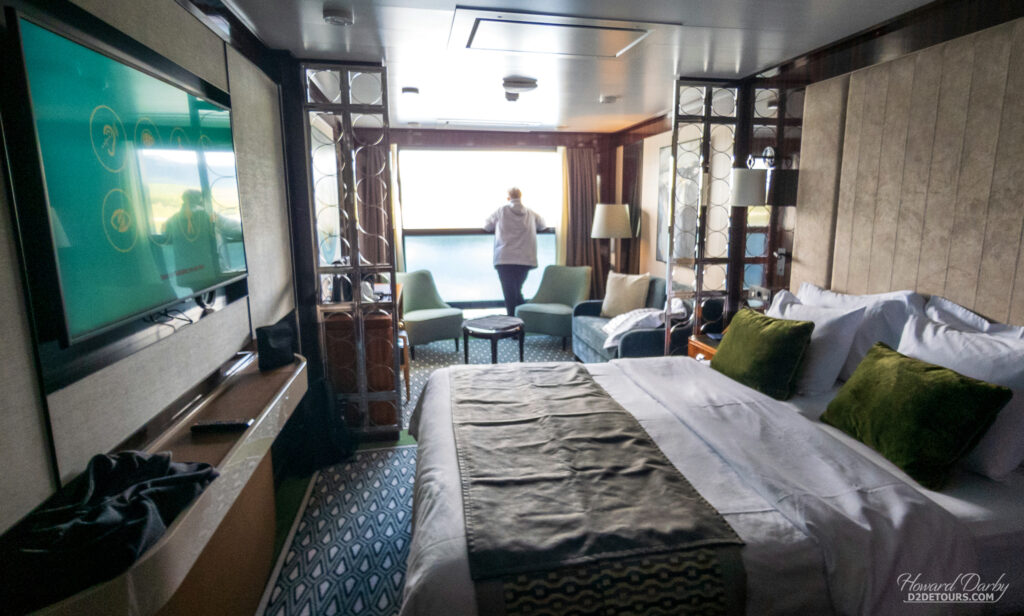
Atlas Ocean Voyages is a luxury cruise operator, and may have ruined us from ever enjoying a cruise with another line. Everything about the ship was top-notch, and no request was too big to accommodate. The food was gourmet (lobster more than once, chateaubriand, Black Angus tenderloin, etc.) with a focus on freshly prepared dishes (including all the bread varieties offered on board!).

It was clear that the objective for every single member of the crew was to ensure guests were receiving the best experience possible. I especially liked that one of the bartenders never failed to greet me with “Hello, Miss Whitney, would you like a Grand Russian” – vodka, Kahlua, triple sec, and cream, who would say no to that?!

Despite all the luxurious touches, the dress code for Atlas’s Antarctic expeditions is decidedly casual, which is perfect for us nomadic travellers where suitcase space comes at a premium. We also didn’t need to worry about packing outdoor winter gear as Atlas provides all passengers with a toasty warm neon green parka (which you could keep, if you have luggage space, which we did not) and waterproof boots (which you have to return). We did need to pack things like gloves, toques, wool socks, waterproof pants, and goggles, but the expedition team gladly accepted all those items at the end of the cruise to distribute amongst the ship staff, or to donate to a few charities in Ushuaia (where the ship sails from).

But enough background, how did our 11-day trip unfold?
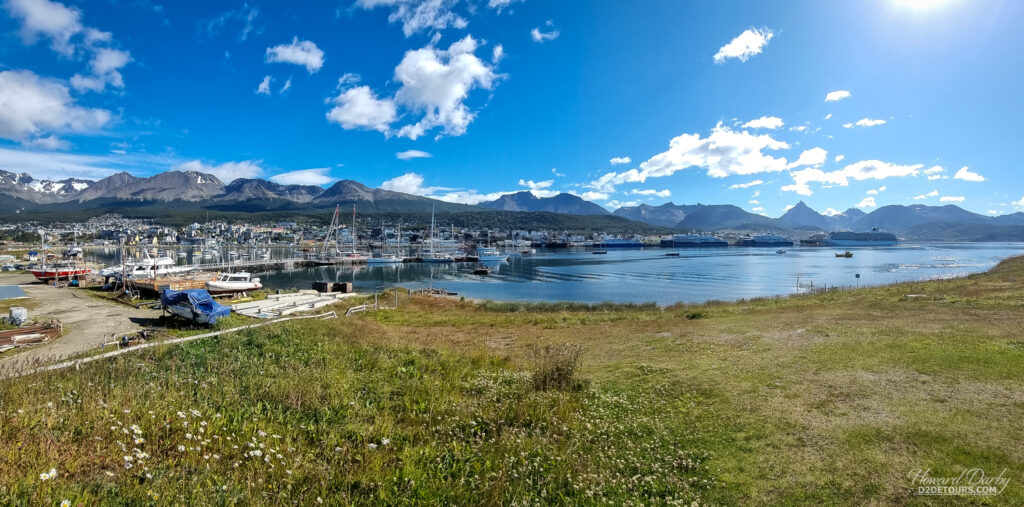
We began with a night at the Hilton in Buenos Aires. Well, not really a full night’s sleep – we had to be up at 3 am to catch a bus to the airport for the charter flight to Ushuaia! We were supposed to have a few hours touring the Tierra del Fuego National Park, 12 km / 7.5 miles west of Ushuaia, before boarding the ship for a 6 pm departure, but the weather forecast for the Drake Passage had other ideas.

The Drake Passage, situated between Cape Horn, the southernmost point of the South American continent, and the South Shetland Islands in Antarctica, marks the confluence of the Atlantic, Pacific, and Southern Oceans. This stretch of water is considered one of the most treacherous bodies of water in the world, characterized by unpredictable weather and swells often exceeding 12 meters / 40 feet. It was named for the explorer/privateer Sir Francis Drake, following his three-year voyage to circumnavigate the globe (1577-1580). In 1578, as the remaining three ships in his flotilla (he started with five) exited from the Strait of Magellan, they were met by an “intolerable tempest.” The Marigold sank, the Elizabeth managed to break free and bolted for England, but the Golden Hind, with Drake aboard, was blown into uncharted waters. The prevailing wisdom of the time was that South America was connected to an as-yet undiscovered landmass. The only water route connecting the Atlantic and Pacific Oceans was the Strait of Magellan, discovered in 1520. Drake’s navigation accident, even though he did not cross the passage in its entirety, proved that an alternate, albeit dangerous, open water route existed. The first intentional crossing of the passage was recorded in 1616 by the Dutch navigator Willem Schouten.
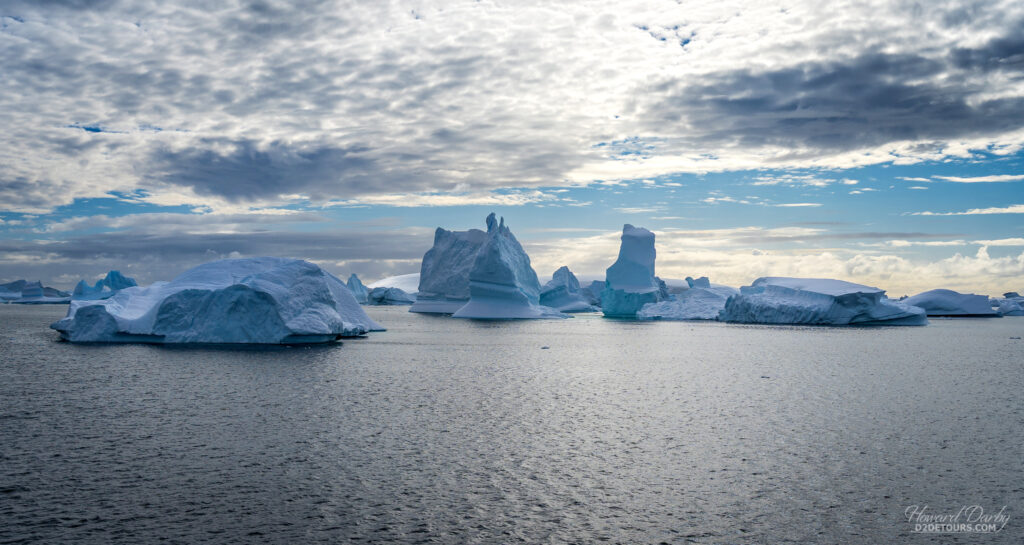
After looking at the forecast for the Passage, our ship’s captain decided we should set sail five hours earlier than intended, so our Tierra del Fuego National Park excursion was cancelled. This turned out to be a brilliant decision by the captain. We experienced the “Drake Shake with a side of Lake” over the two-day crossing, enduring only moderate swells of 3-5 meters / 10-16 feet. Howard isn’t susceptible to motion sickness at all, and I managed quite nicely with just over-the-counter anti-nausea meds. Our return trip was even less rocky – we considered ourselves very lucky. We heard later that several ships setting sail from Ushuaia on the same day as our departure, opted to stick with their scheduled sailing time; they were forced to spend nearly 22 hours at the mouth of the Passage waiting for a safe window to cross.
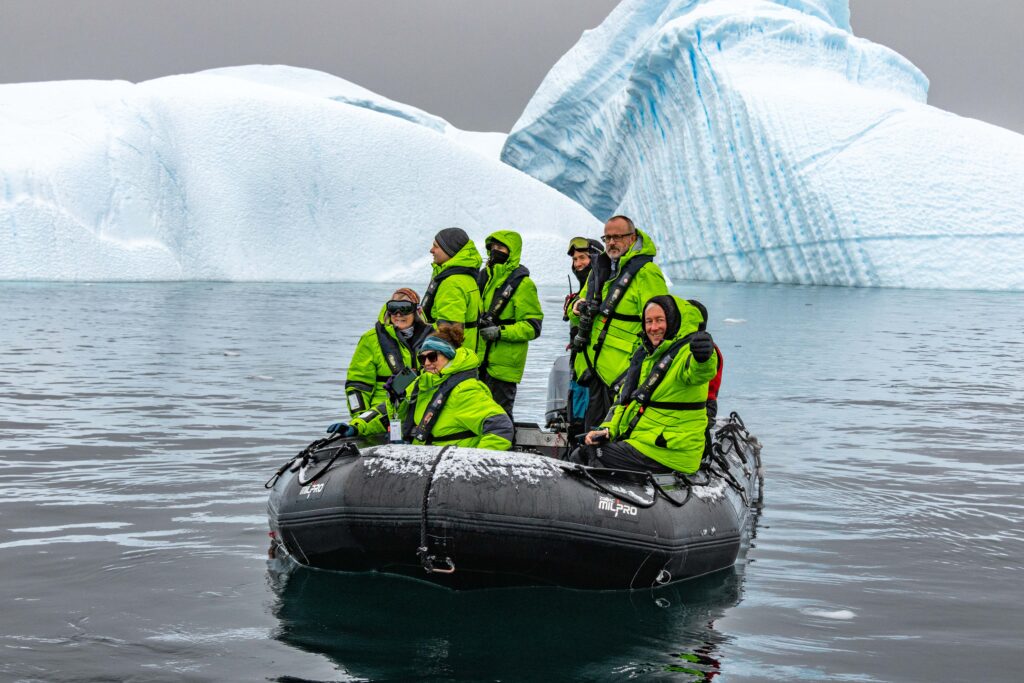
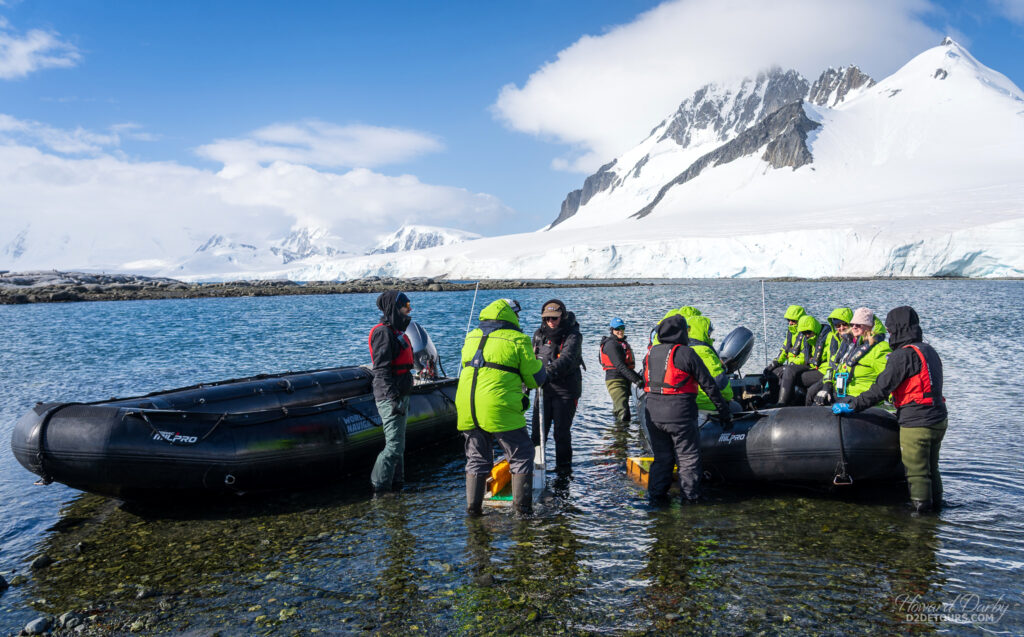
The itinerary for our expedition included six days of two-a-day zodiac safaris and/or continent landings along the Antarctic Peninsula. Because of our captain’s astute decision to leave Ushuaia early, we got a bonus day of zodiac cruising, giving us a total of 14 excursions on and around the Peninsula – magical.
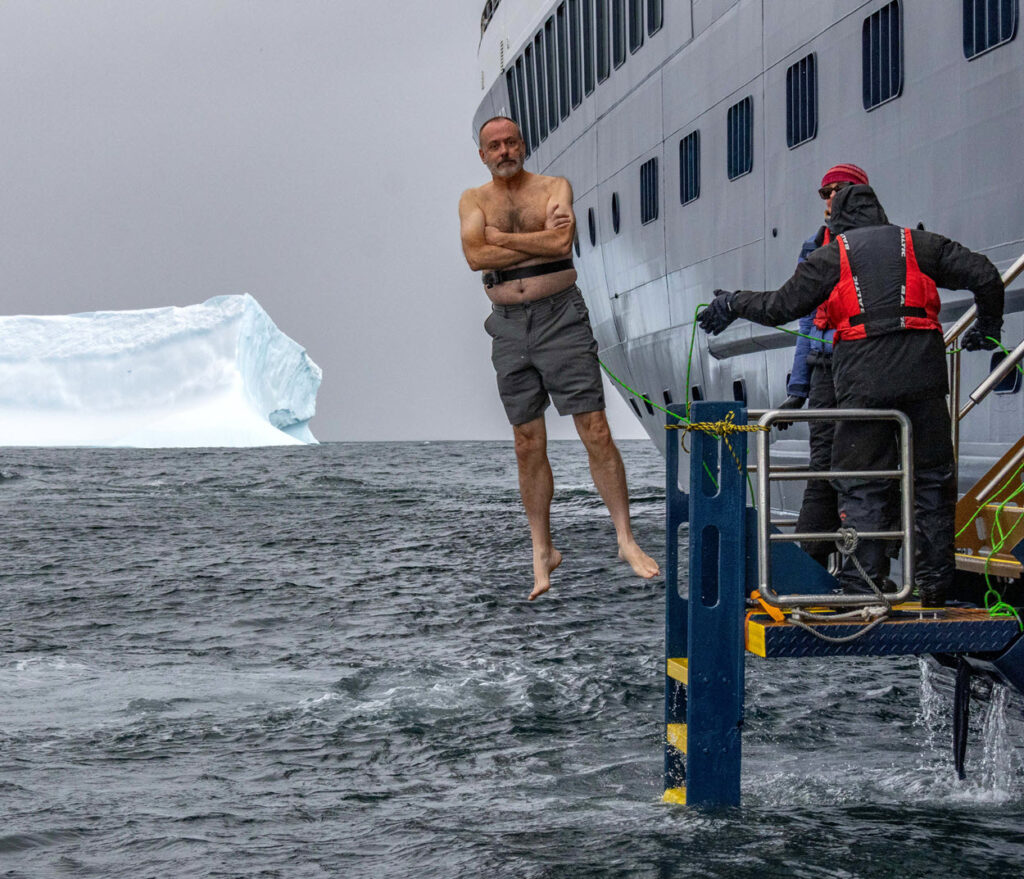
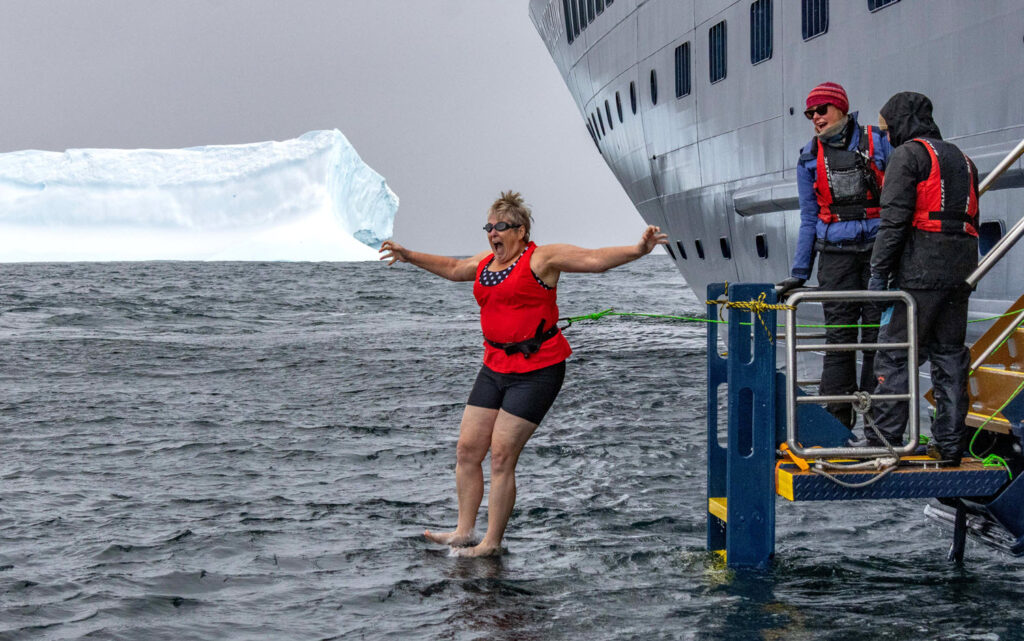
I’ll let Howard’s photos do the rest of the talking for our trip, but will finish my contribution to this blog post with the details of our Polar Plunge. Considered by many to be the highlight of any polar expedition, we didn’t want to miss out on the thrill, so willingly jumped into the frigid (-1°C / 30°F) waters of Antarctica. To provide you with some context, at that temperature, hypothermia will set in in roughly 15 minutes, causing loss of consciousness and death soon thereafter. Howard was unfazed by this knowledge; one might even describe his attitude towards the jump as nonchalant…
I, on the other hand, had the more reasonable reaction…
And now, enjoy a small taste of what Antarctica has to offer.
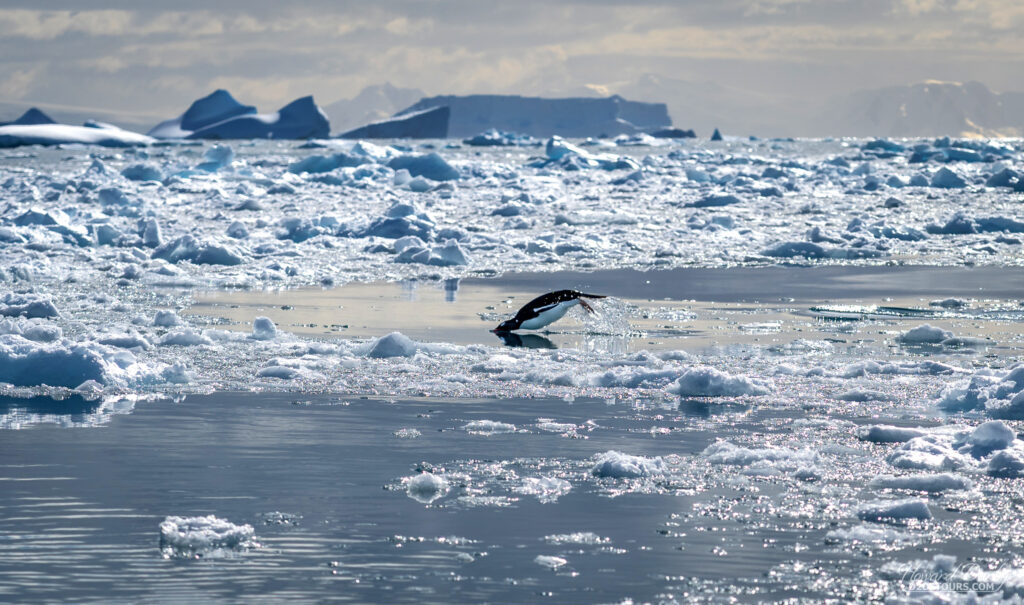
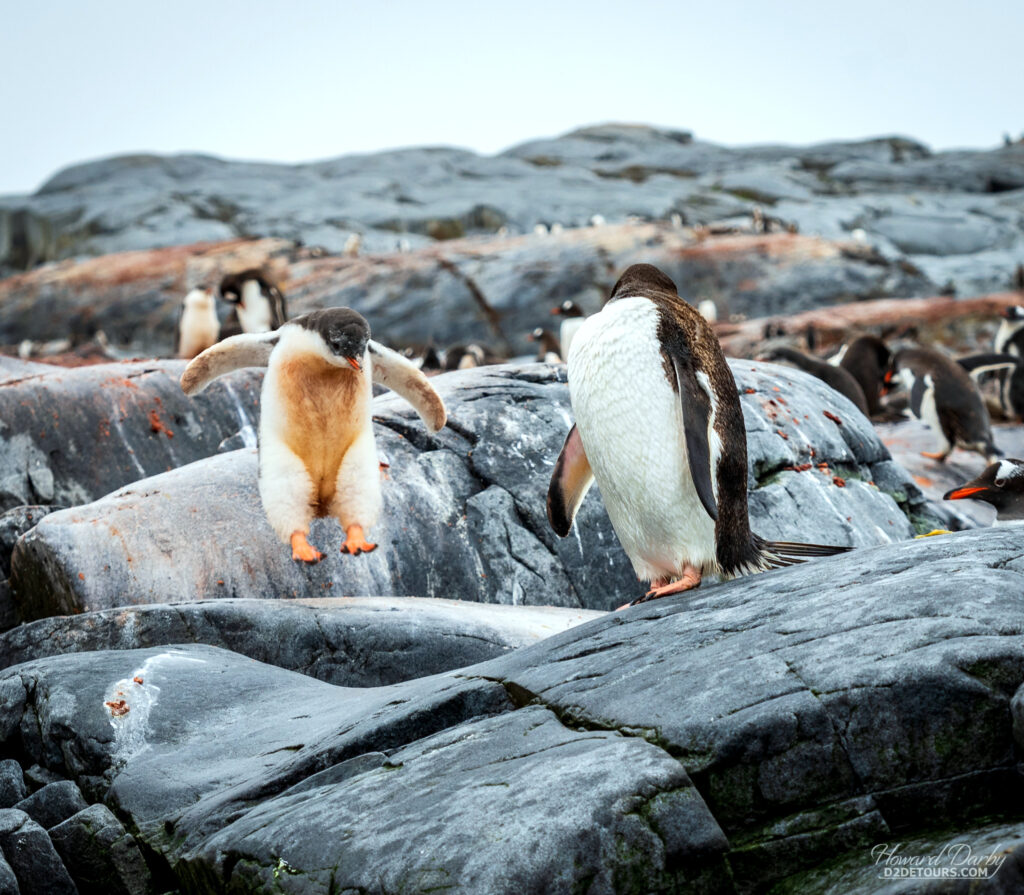
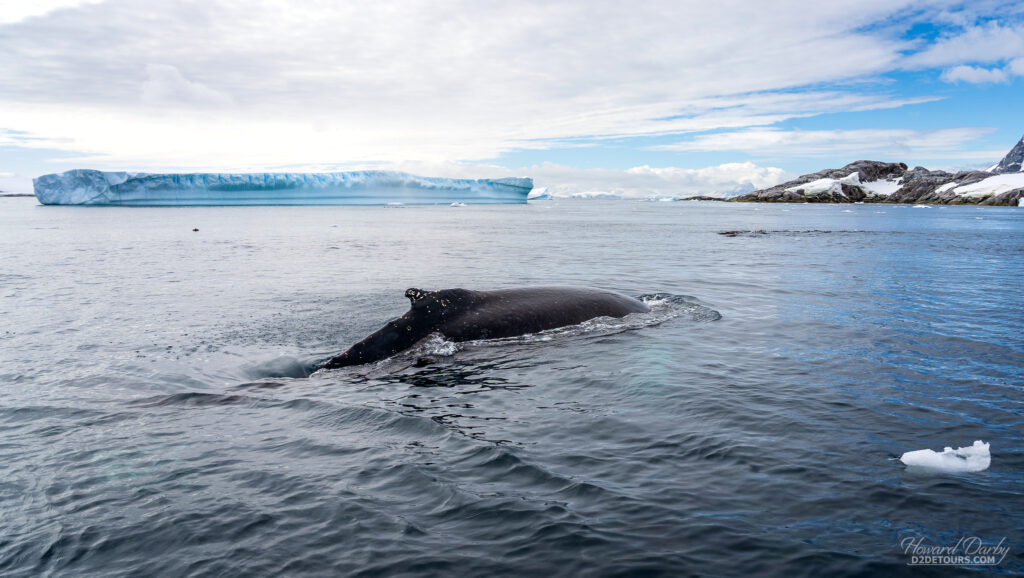
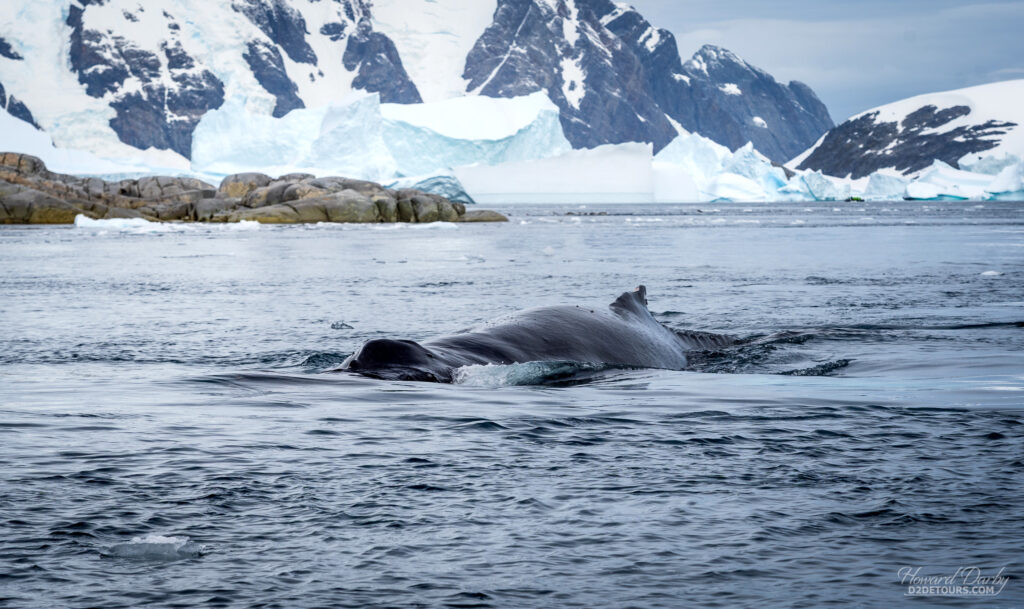
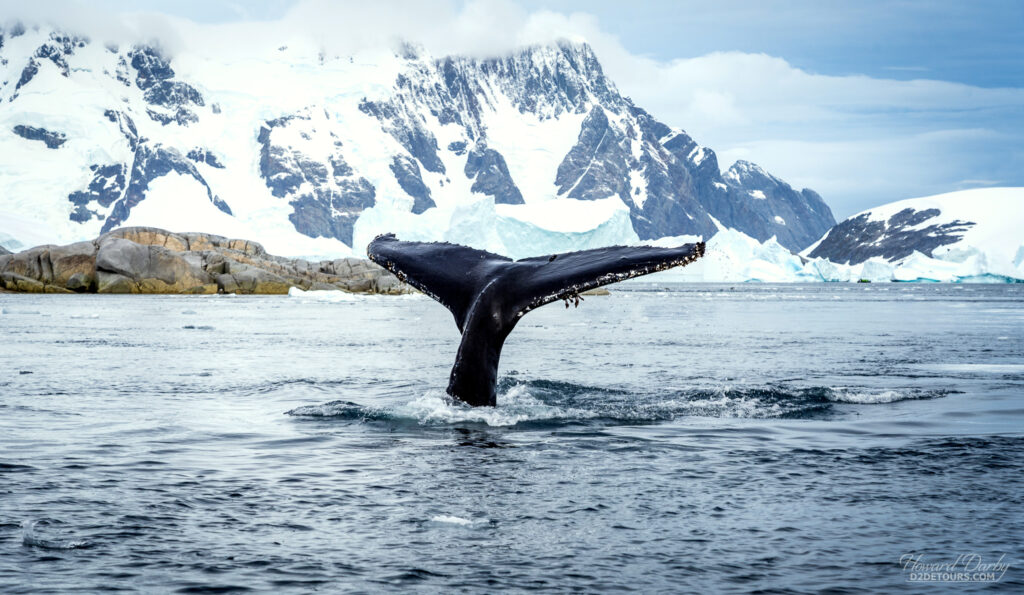
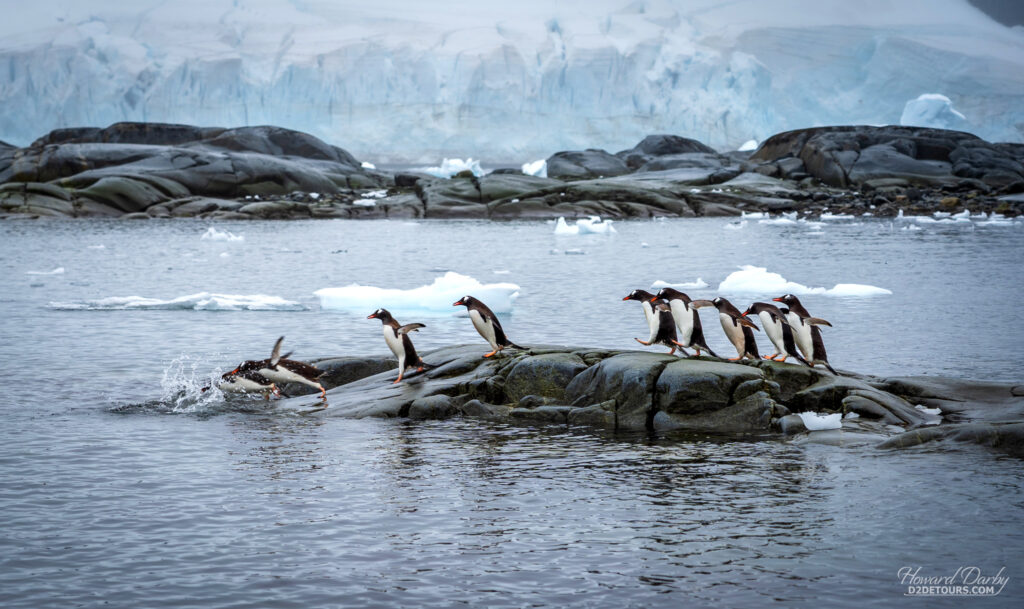
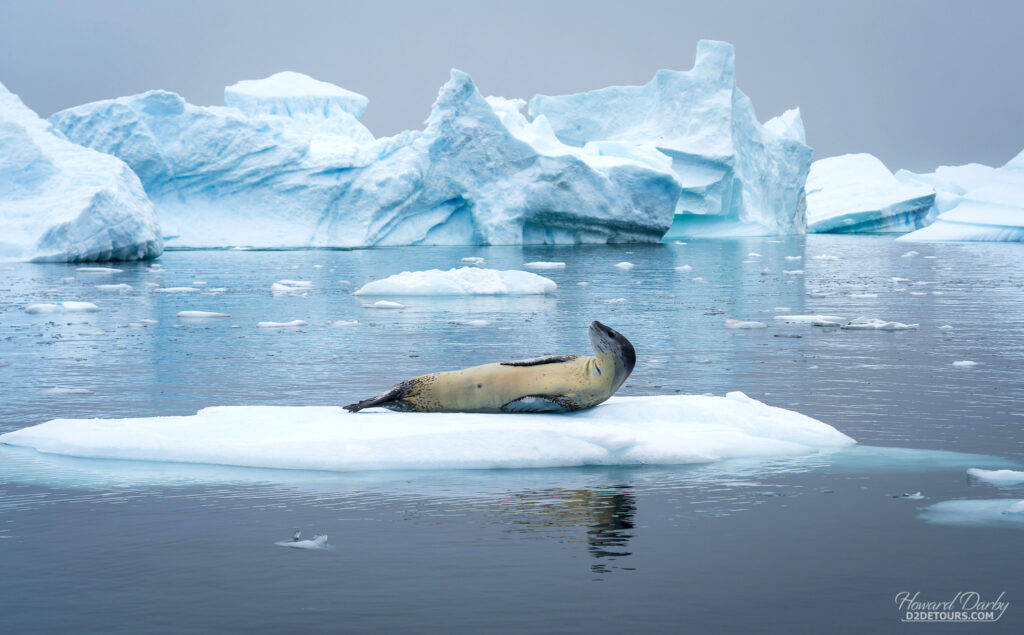
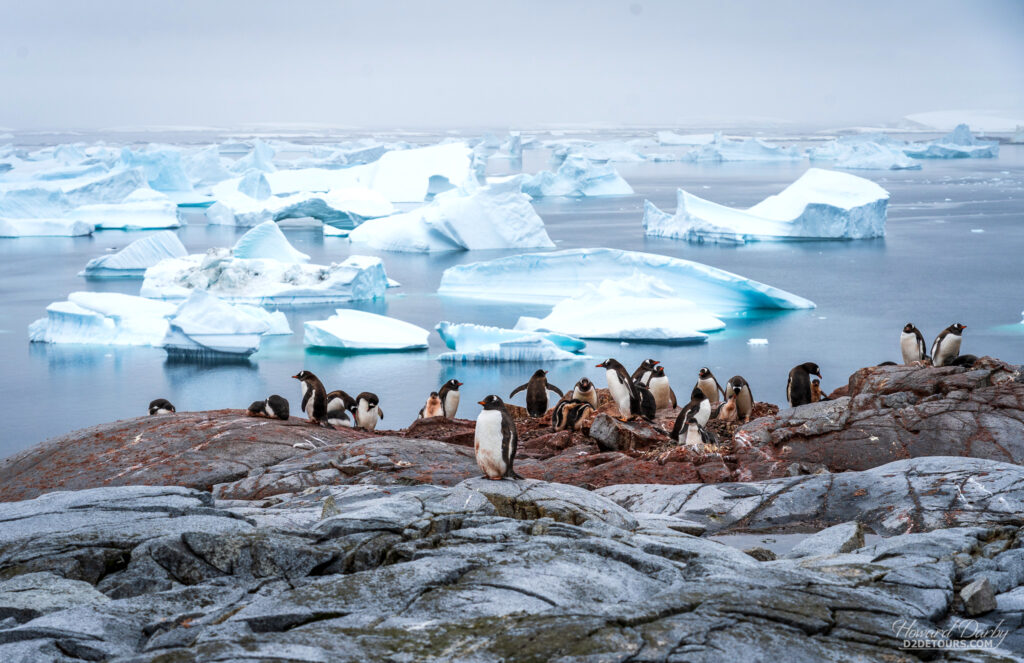
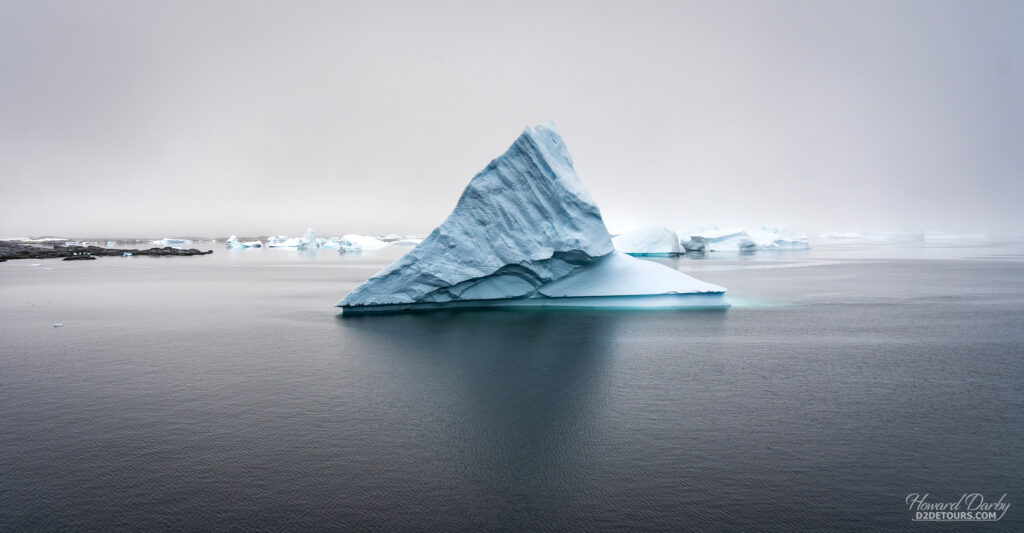
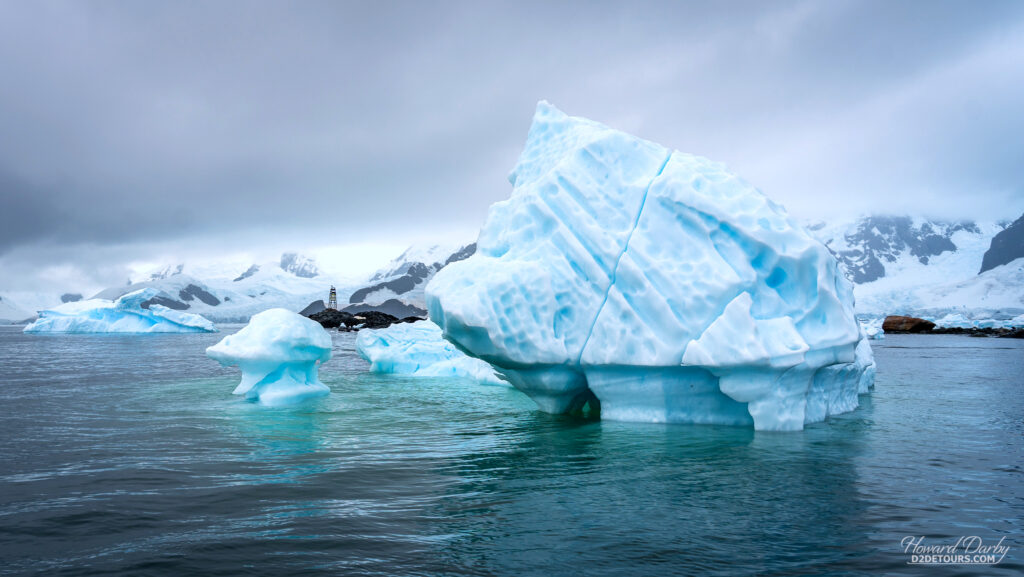
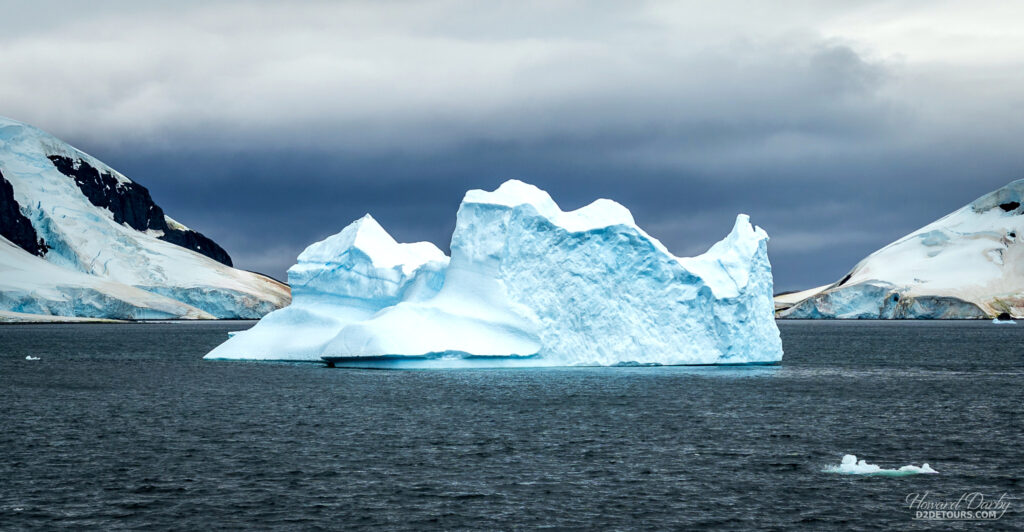

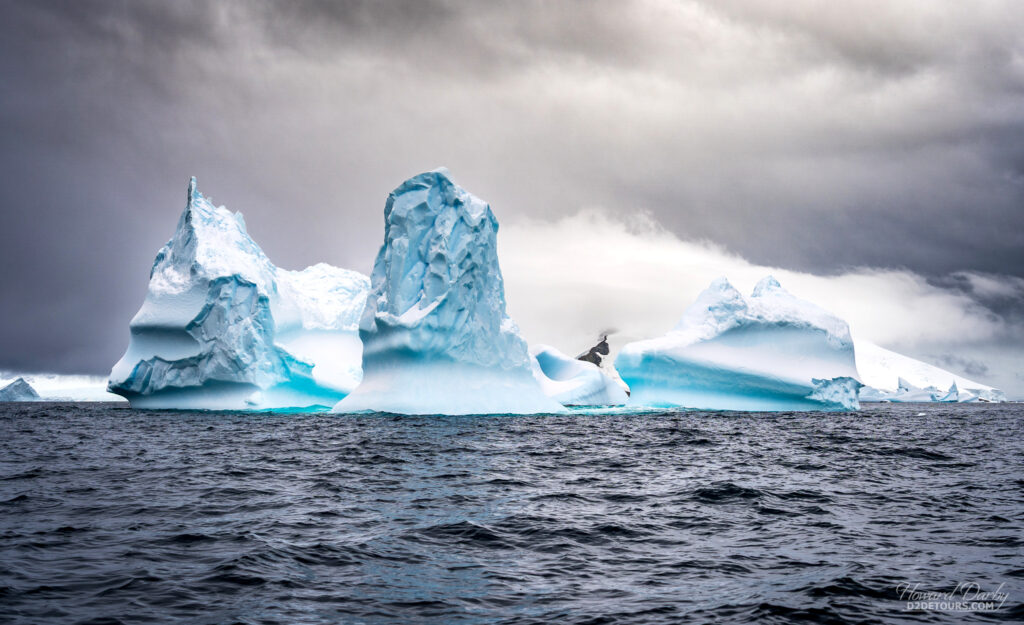
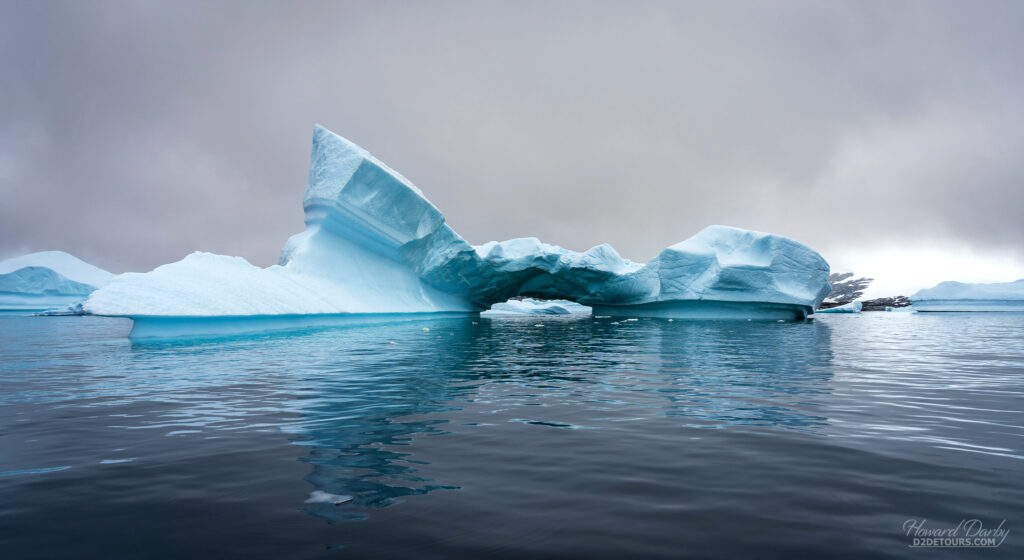
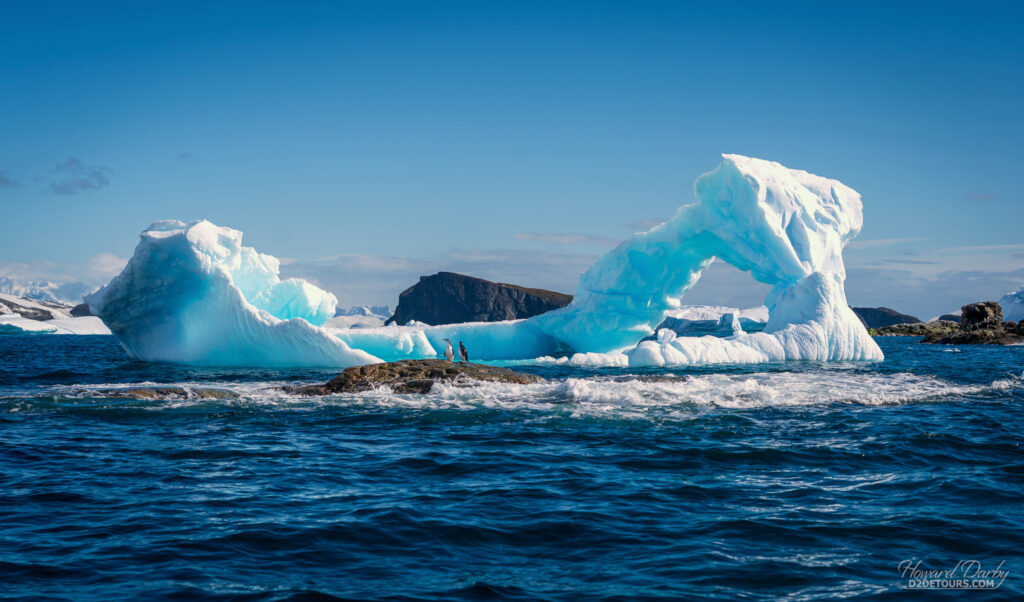
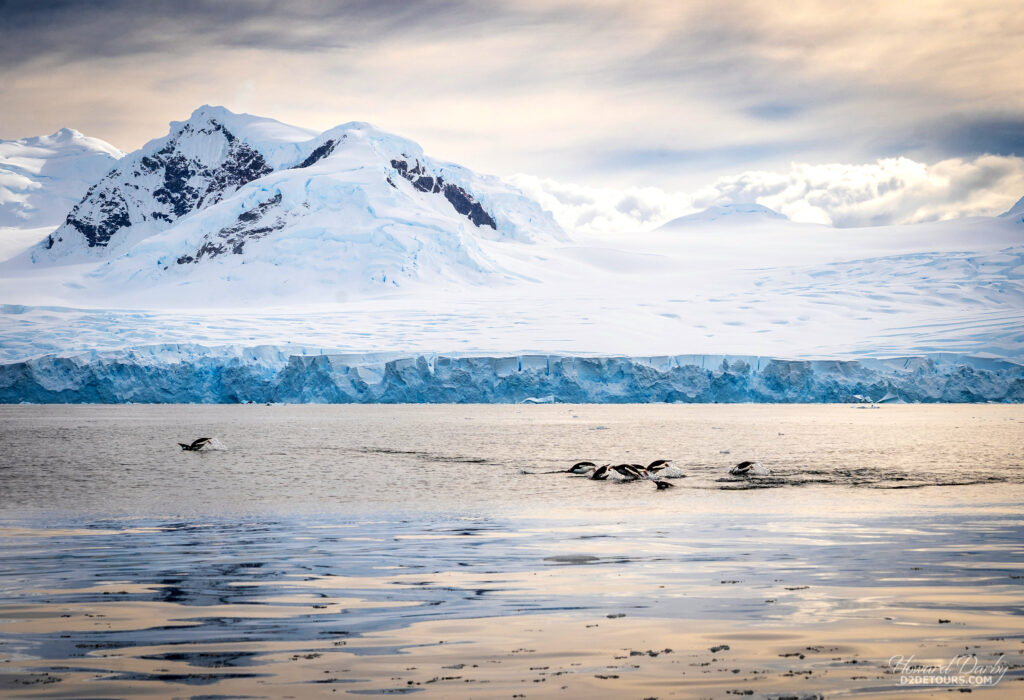
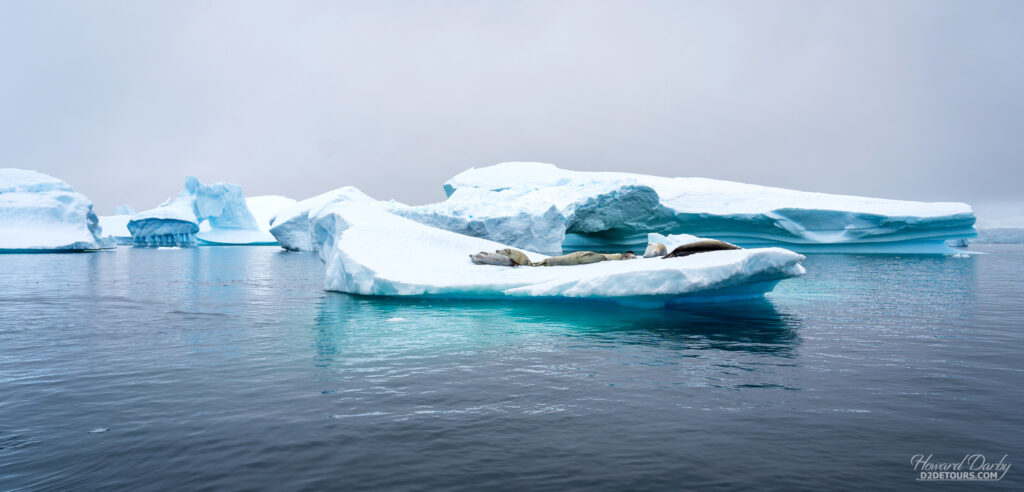


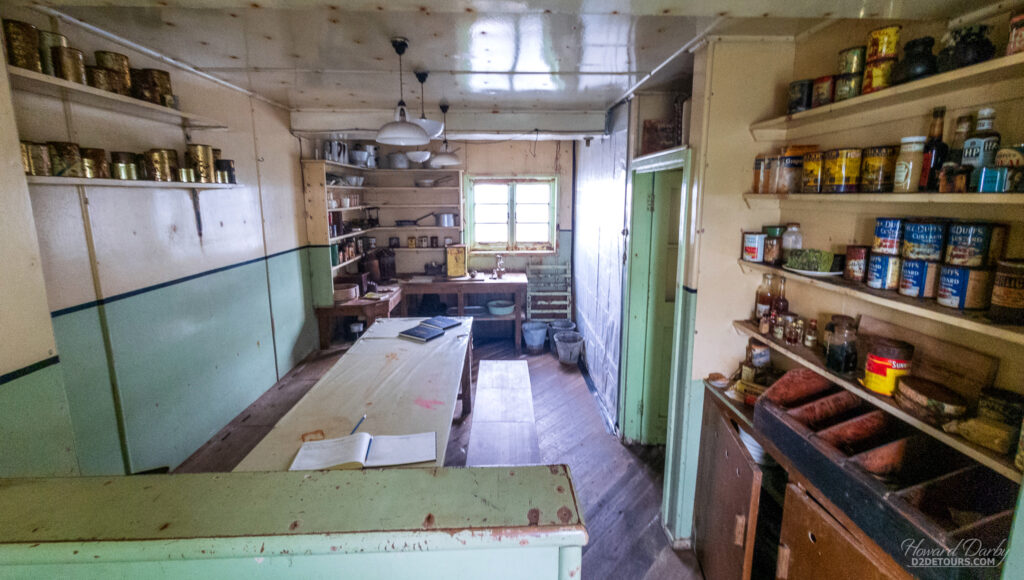
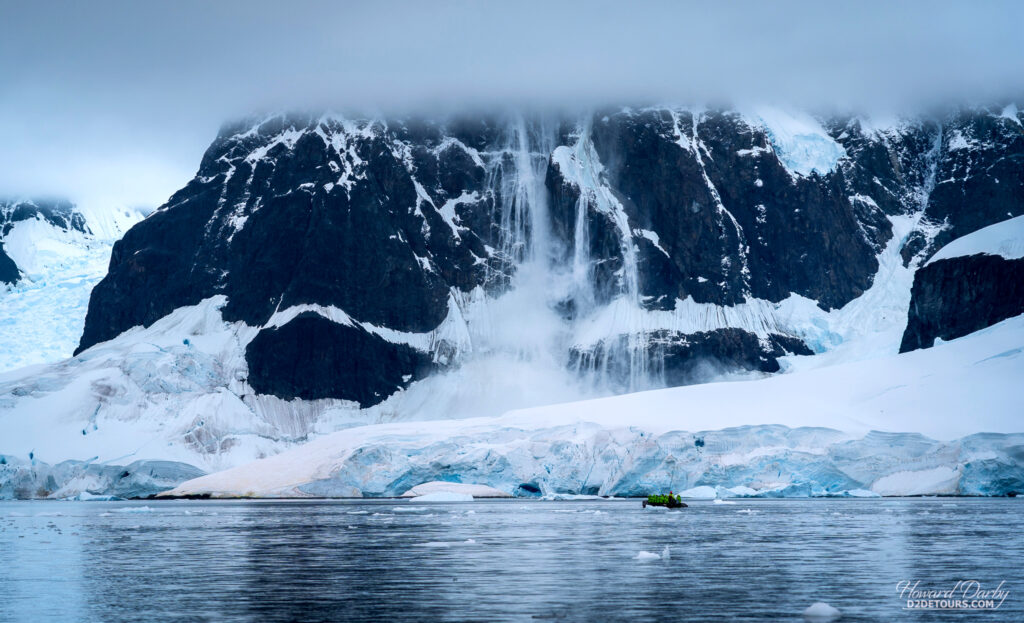

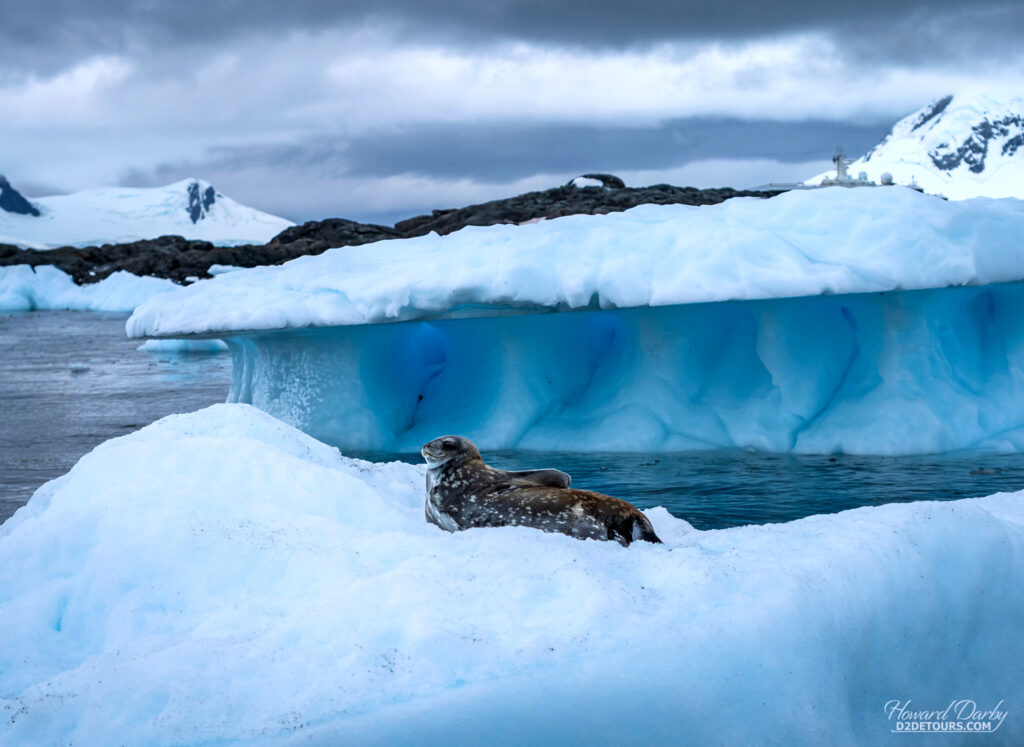
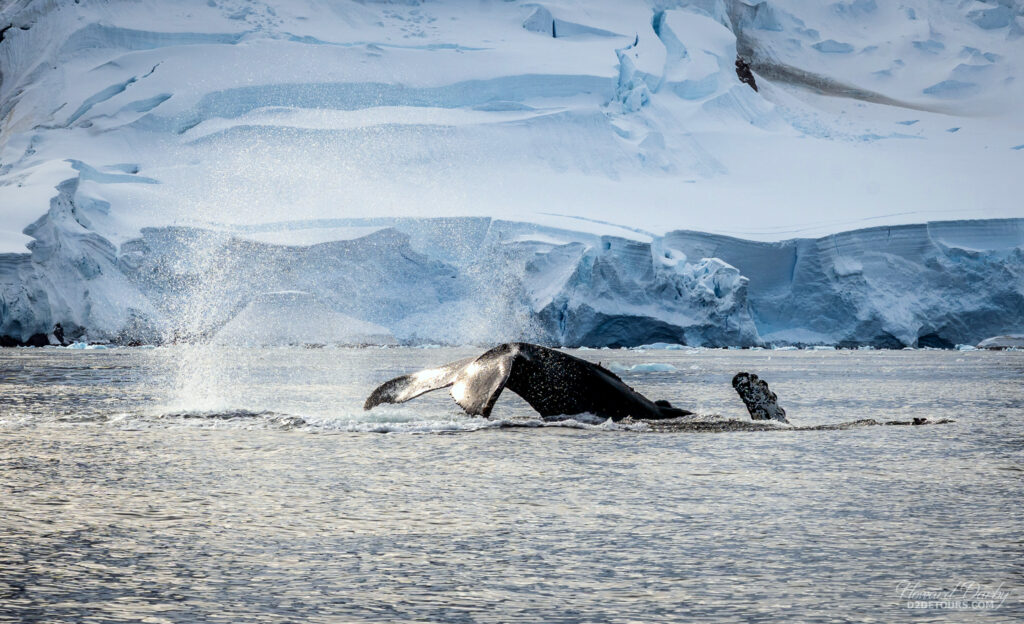
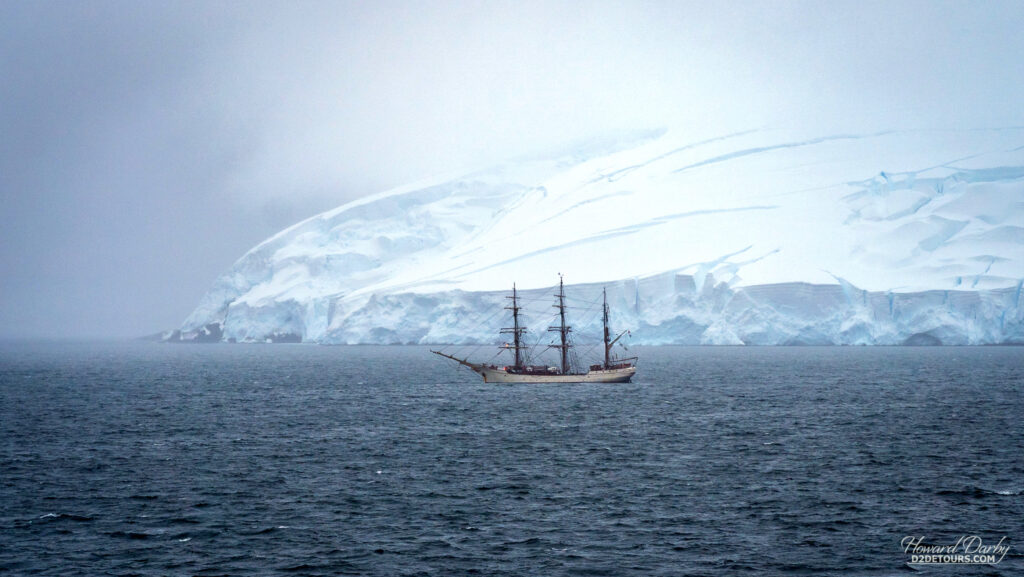
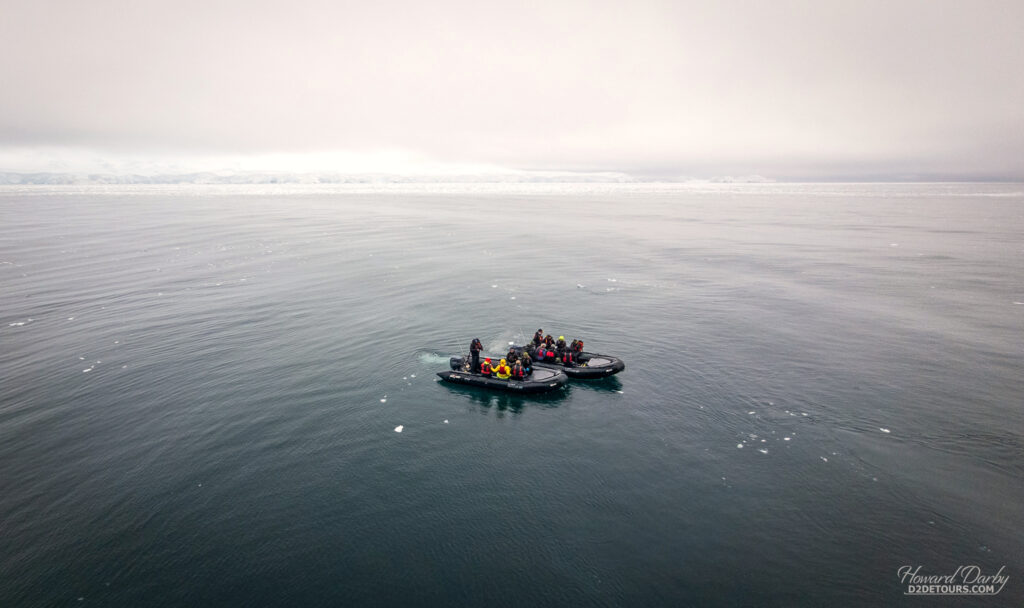
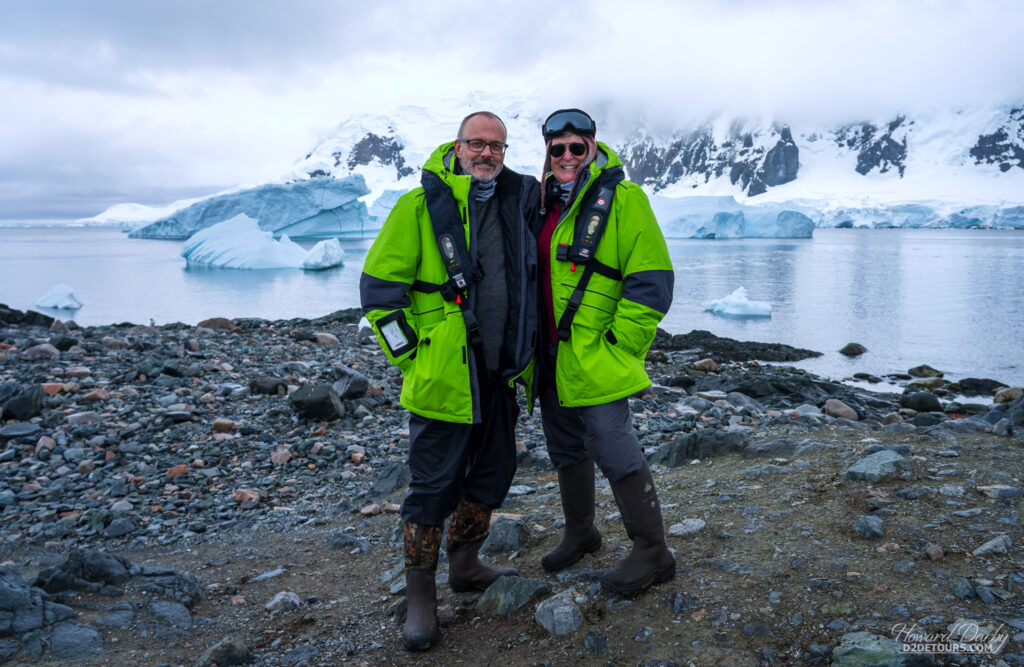
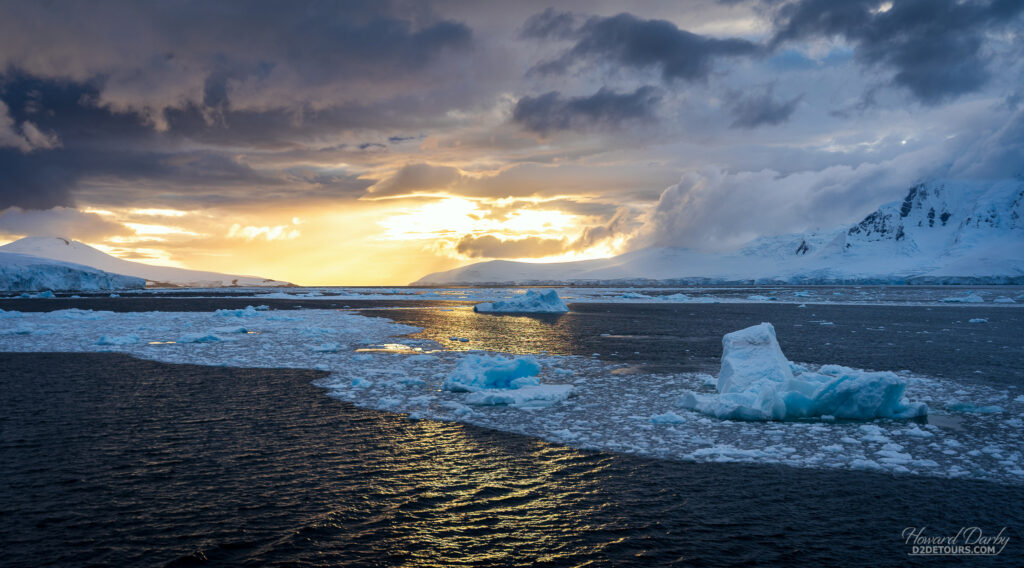

WOW!
Such an amazing trip. What a great summary and gorgeous pics as always. It was really fun to meet y’all and hang out. Let’s play “poof” somewhere in the world again soon!
I’ll hold you to that game of poof somewhere down the road – safe travels!