Me voilà de retour! It’s been a while – roughly 168 kilometres (104 miles), 40 locks, and one tunnel since our last update.
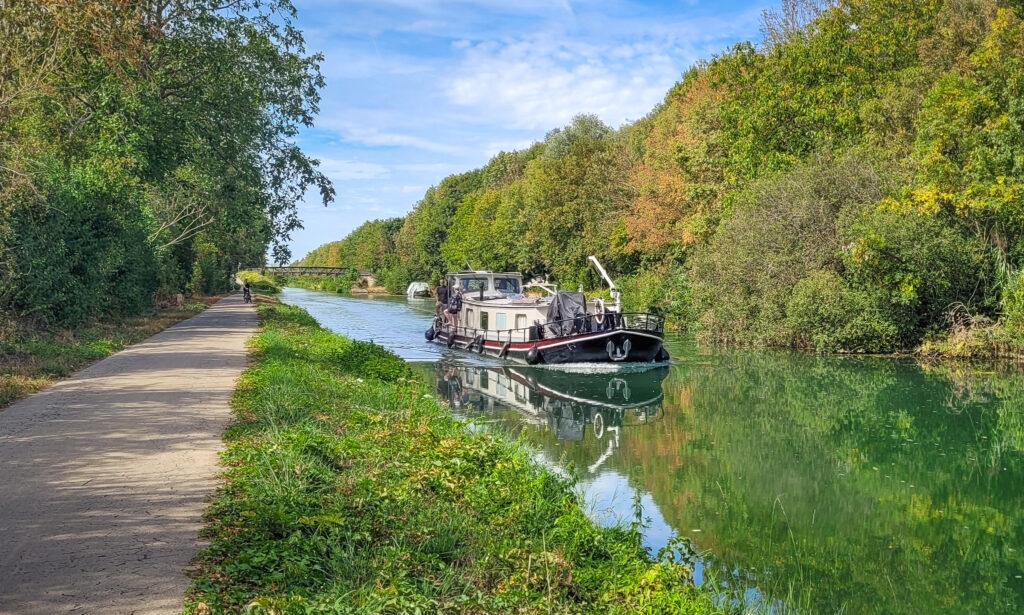
From Compiègne, we turned onto the River Aisne, leaving behind the commercial highways of the Seine and the Oise, which we’d been navigating since mid-July. Here, we entered a much more appealing river network: the Freycinet-gauge waterways.
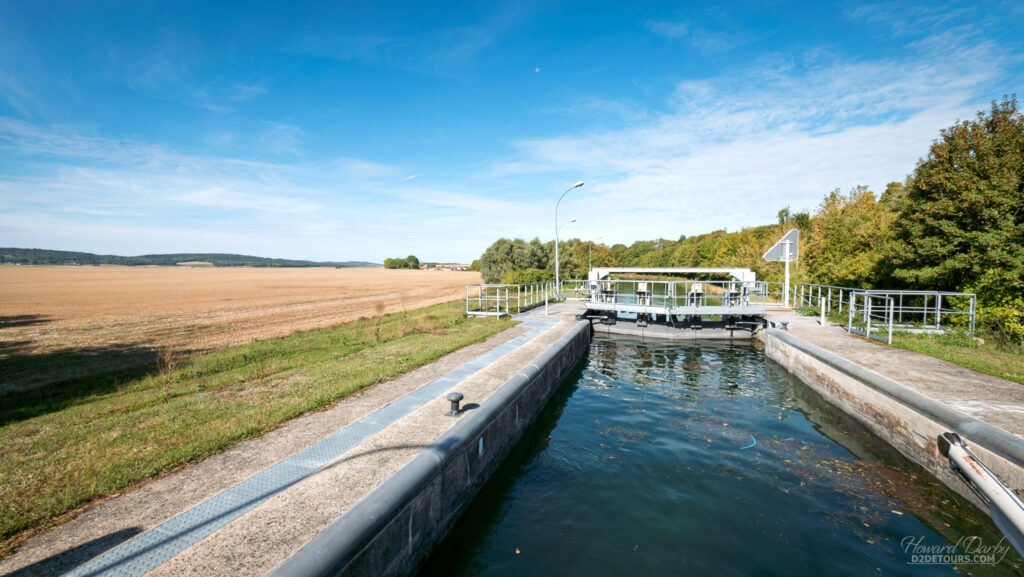
In 19th-century France, canals and locks had zero uniformity. To streamline cross-country shipping, standardized dimensions were passed into law in 1879 and named for the Minister of Public Works at the time, Charles de Freycinet. A radical infrastructure overhaul was necessary to comply with the new law. Old canals were widened to between 10 and 16 m (33 to 52 ft), deepened where necessary, and re-engineered with locks measuring 39 m x 5.2 m (128 ft x 17 ft). Thousands of kilometres of new canals and locks were also dug, increasing the usable waterway network from 1,450 kilometres (900 miles) to 5,800 kilometres (3,604 miles). All of this led to the creation of the French péniche (barge), measuring 38.5 m x 5.05 m (126.31 ft x 16.57 ft), which, as Goldilocks might say, was “just right” for the new system. Two-thirds of modern-day French waterways are still Freycinet-gauge.
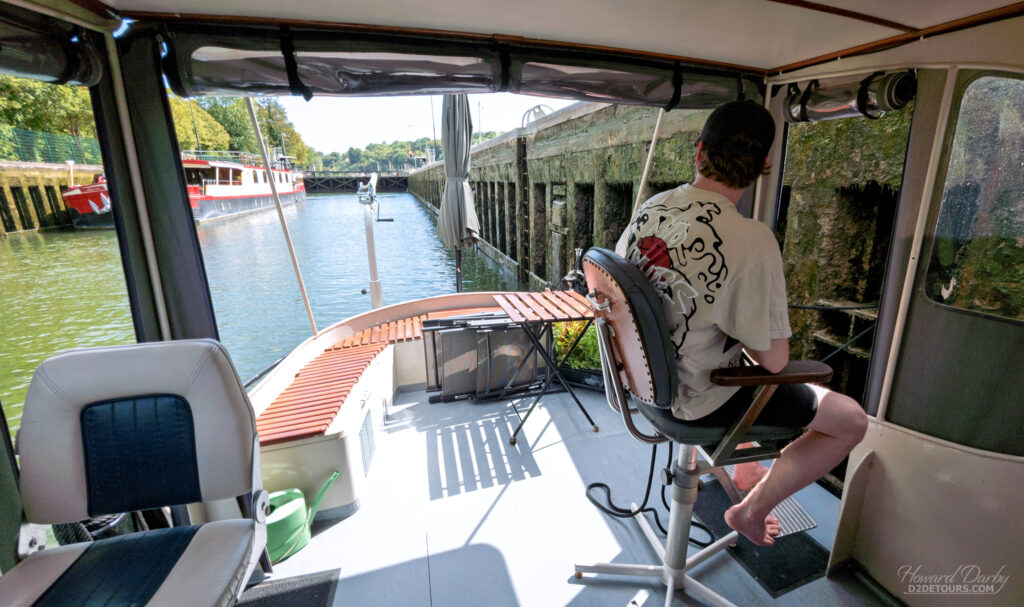
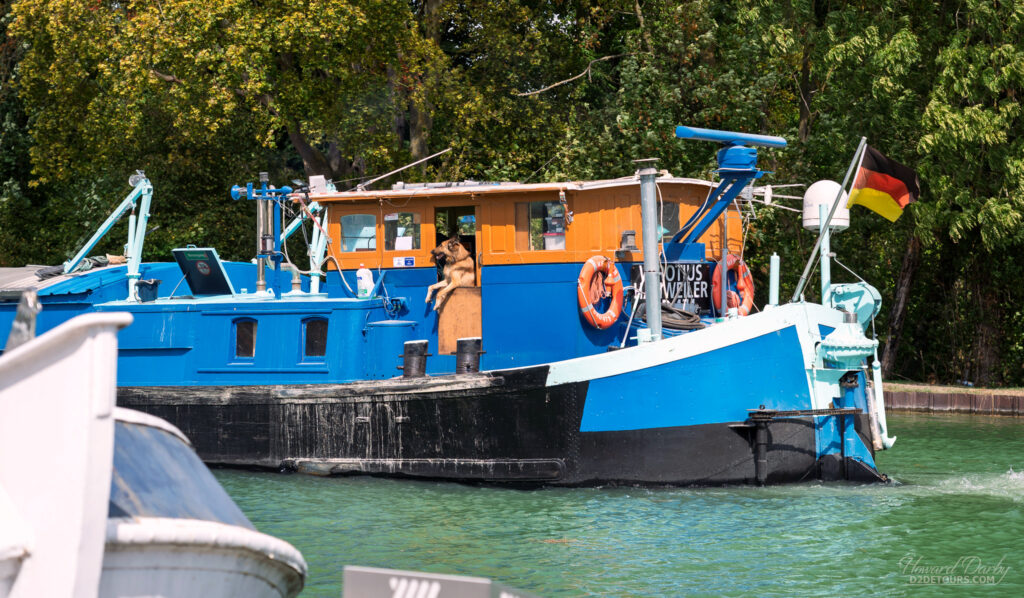
It was not only the relief of the smaller-scaled waterways and locks, but the lock protocol itself was significantly less stressful too. The modern commercial locks we’ve been encountering typically consist of two side-by-side chambers: a large chamber measuring 185 m x 12 m (607 ft x 39 ft) and a slightly smaller chamber at 125 m x 12 m (410 ft x 39 ft). With my limited French, I was tasked with radioing ahead to the lockkeepers to announce our imminent arrival and await instructions. As a pleasure craft, we always have to give way to commercial traffic. I had my script well-rehearsed and would listen intently for two critical words buried in the French reply: gauche or droite (left or right), so we knew which chamber’s lights to watch. Lockkeepers need to keep traffic moving, so once you’re inside, there is no dillydallying when it comes to getting your ropes organized for the ride up or down.
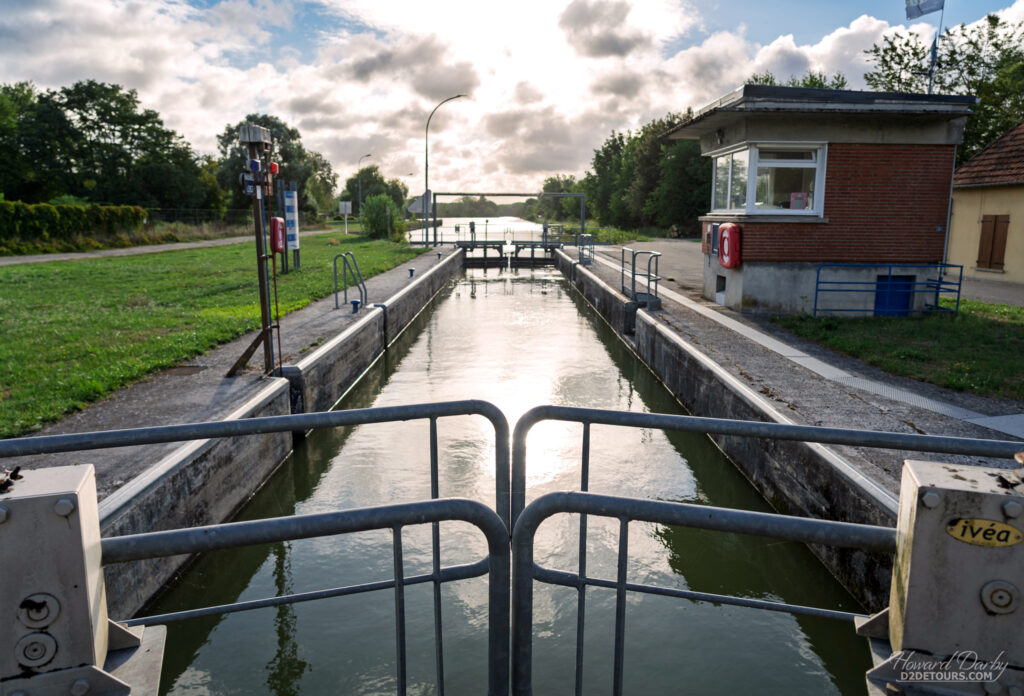
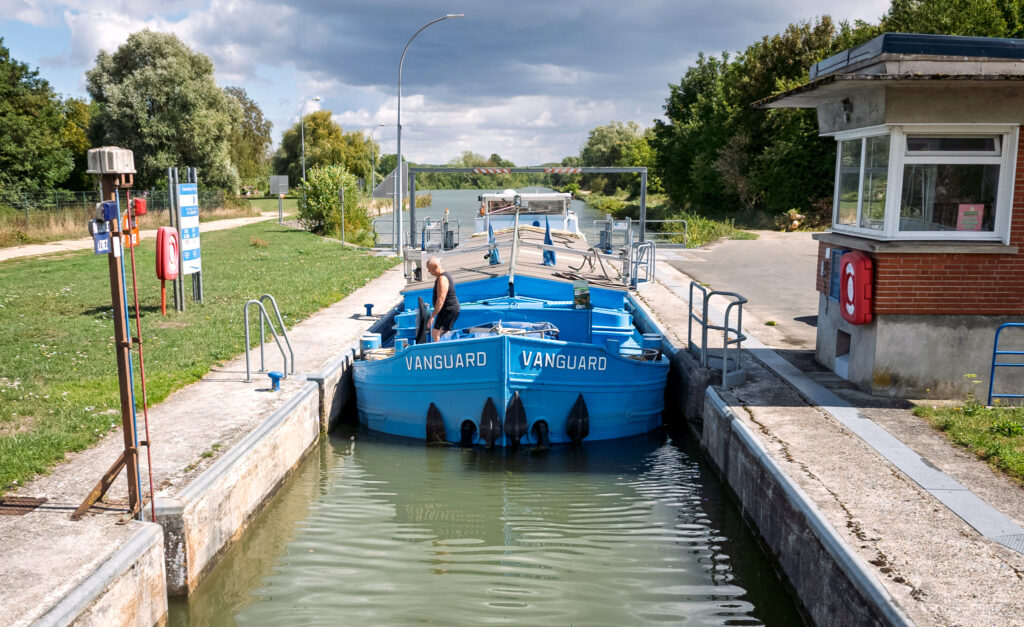
The vast majority of the Freycinet-gauge waterways are automated. There is no audience watching me struggle to throw a rope over a bollard; there is only room for a single boat in the lock (meaning no risk of getting jostled by some mammoth commercial vessel); and once you are comfortably settled inside, only then do you activate the process.
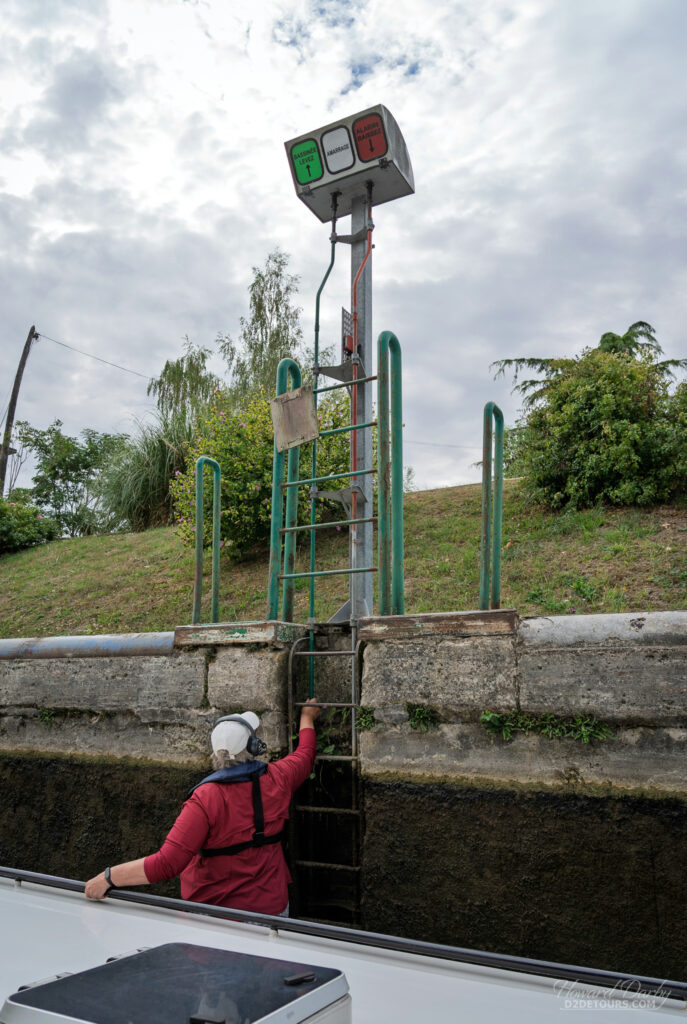
We experienced all three of these fabulous automated operations:
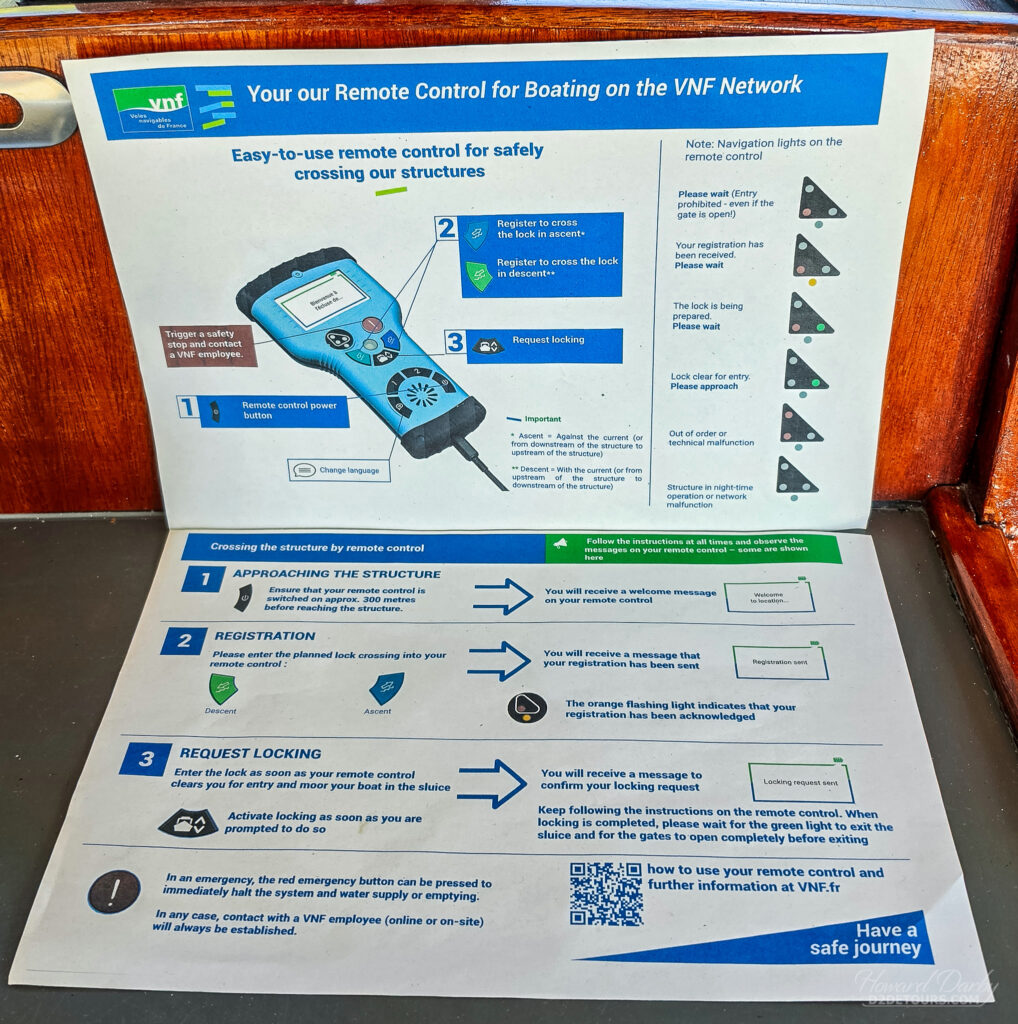
- Remote Controls: A handheld electronic clicker issued by VNF (Voies Navigables de France) at the start of a canal section. As you get within 300 m (984 ft) of a lock, you activate it by pressing the applicable ascend or descend button.
- Sensors or Push-Buttons: Automated electronic ground sensors or bank-side buttons that detect a passing vessel’s hull to trigger an upcoming lock cycle.
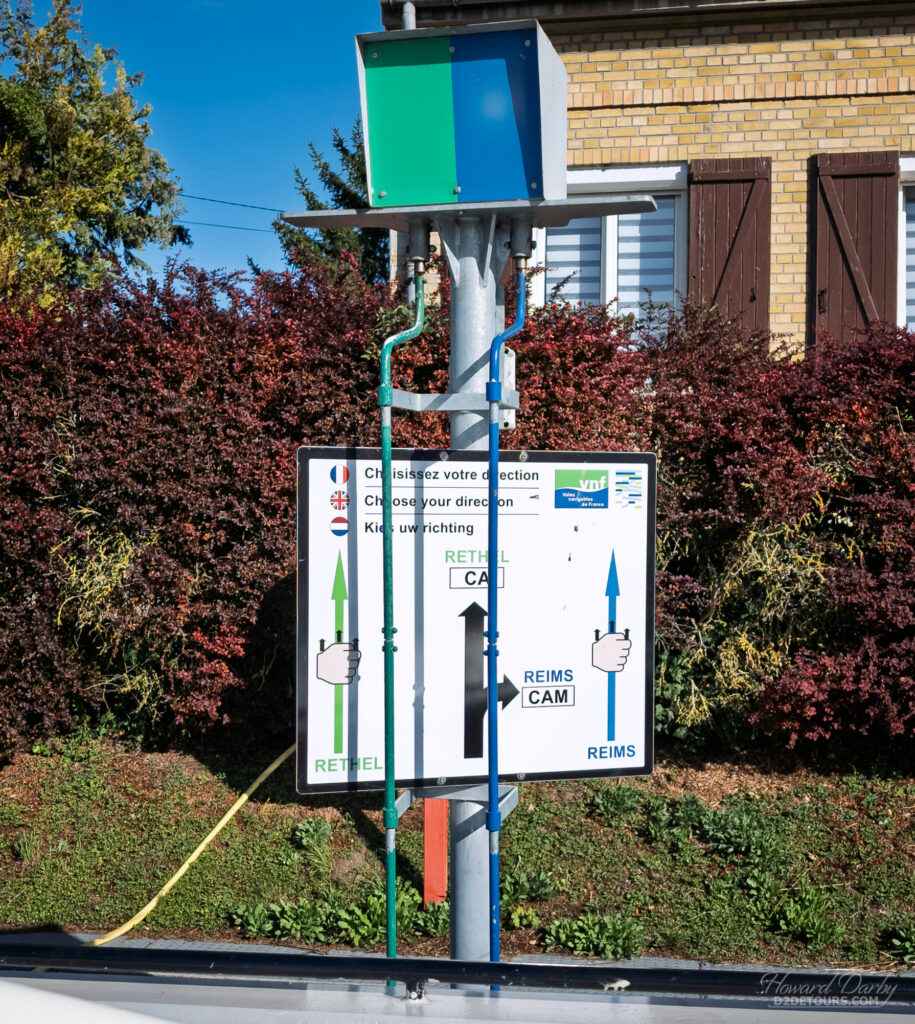
- Hanging Poles (Les Perches): A blue rod or cord hanging over the water (while some might have been blue in a past life, many were now a dingy yellow). You twist or pull it as your boat slowly passes by (or beneath) to activate the lock.
All of these systems worked beautifully, though Howard soon realized he needed to slow his speed somewhat for the perches. I needed more than a split second to twist the pole before it was ripped from my hand, which then forced Howard to frantically try to grab it from the wheelhouse or, as may or may not have happened, we had to put the boat in reverse to get back under the pole!
Immediately after leaving Compiègne, we picked up a remote control for the locks along this stretch of the canals.
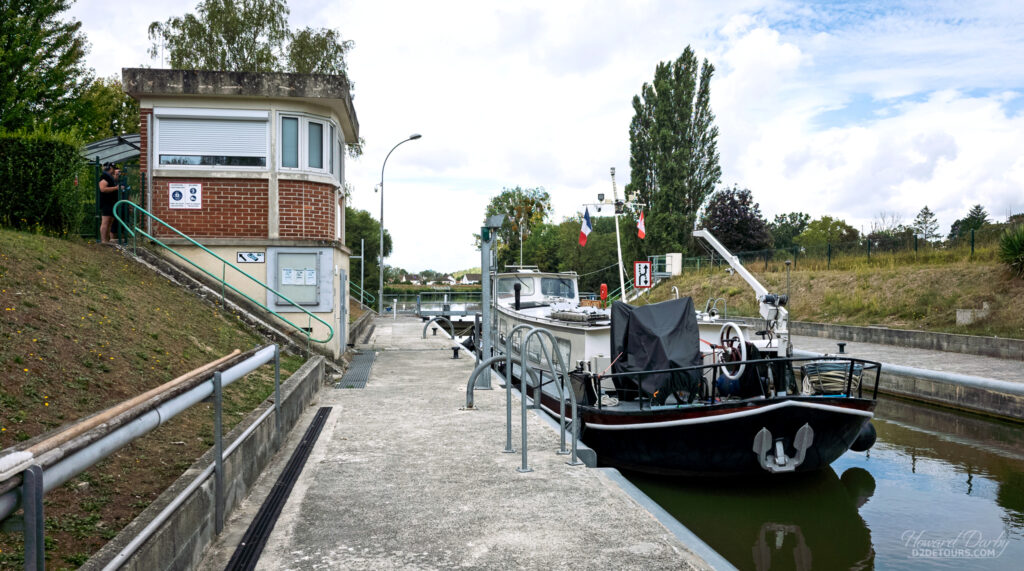
After passing through four locks we tied up for a couple of days at Vic-sur-Aisne — an absolutely idyllic setting and exactly what I had envisioned of life on the French canals.
This tiny town is situated at a natural crossing point along the winding River Aisne. Thanks to this geography, a small defensive force could easily control access across northern France. That control was put to the test in the late 9th century, when forces at Vic-sur-Aisne successfully protected the royal city of Soissons from Viking invaders.
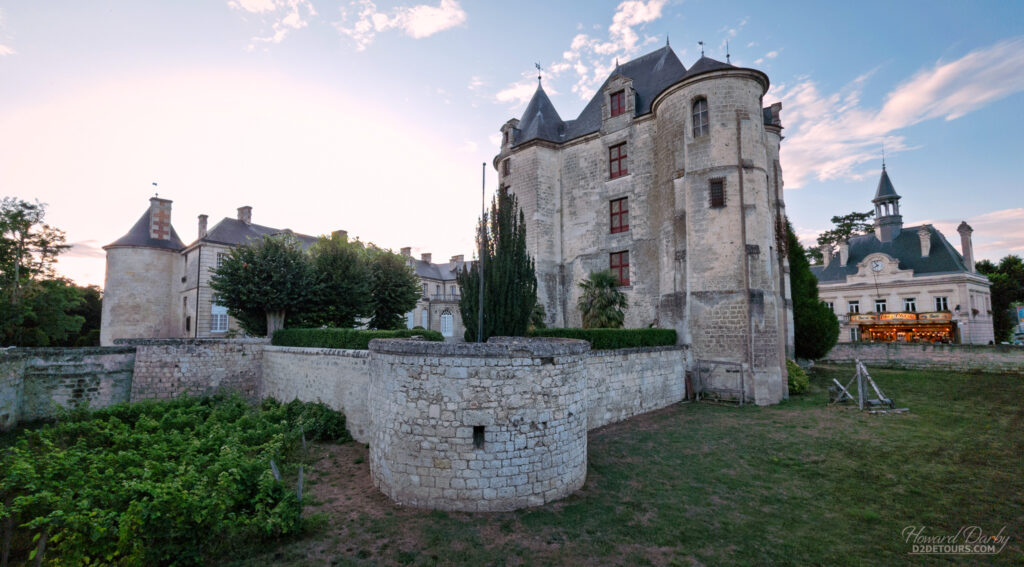
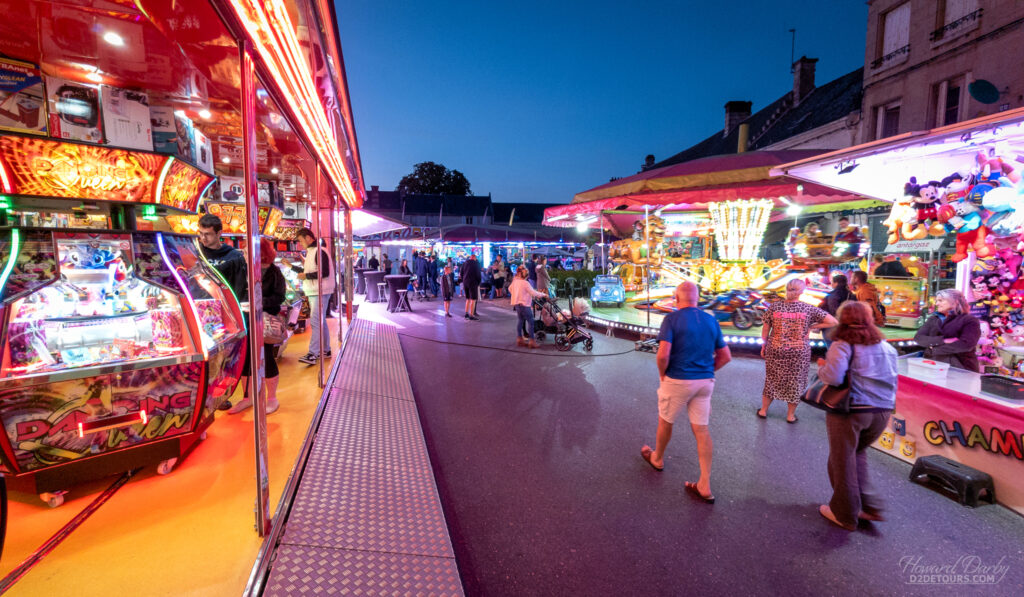
Centuries later, during World War I, the village became a vital railway hub and a jumping-off point for troops heading to the Somme and Verdun.
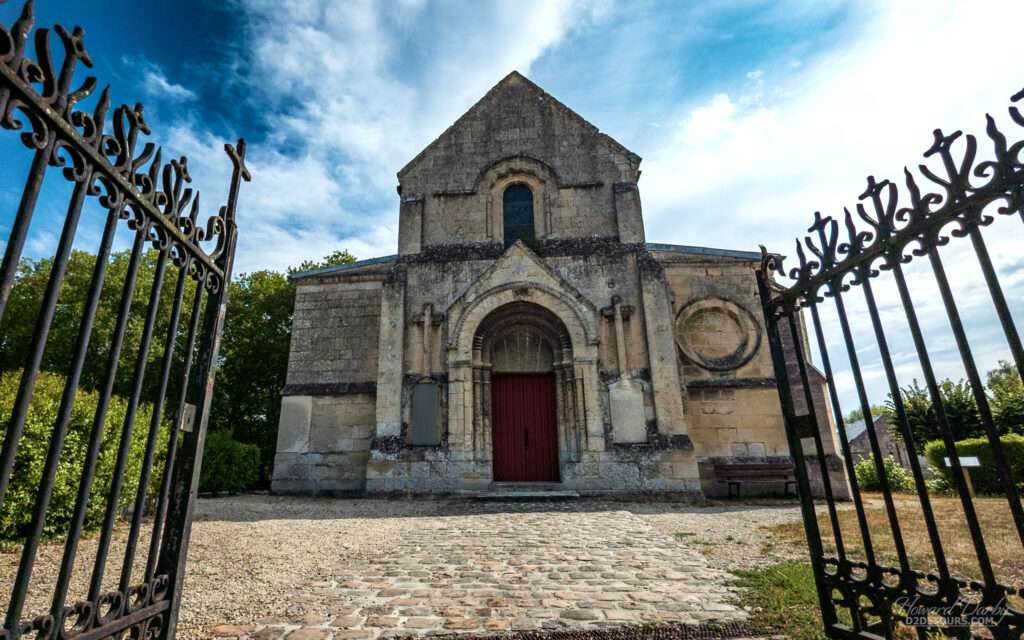
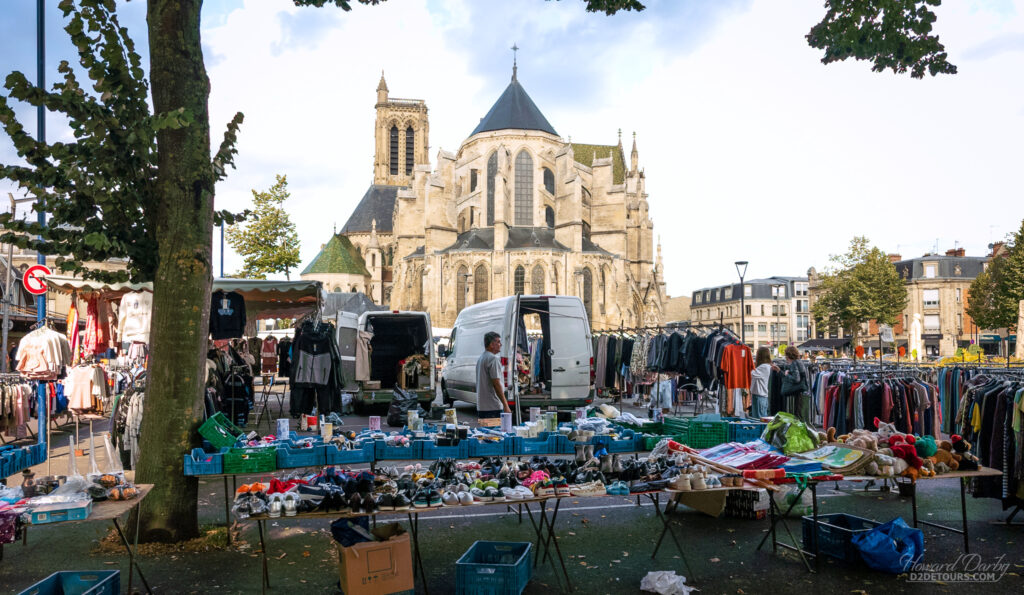
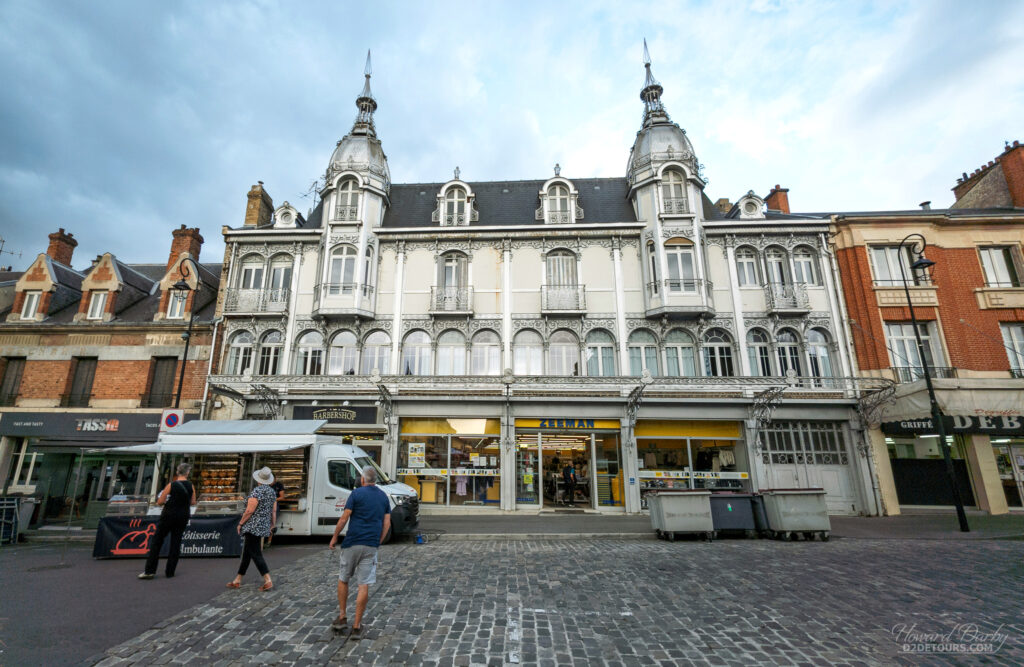
Unlike the Vikings, we did make it to Soissons. If I’m being honest, this city didn’t really capture my heart; I felt it lacked charm. Then I read that relentless shelling by the Germans during WWI left nearly 80% of the city uninhabitable; much of what stands today is the Art Deco rebuild from the 1920s. So that might explain it.
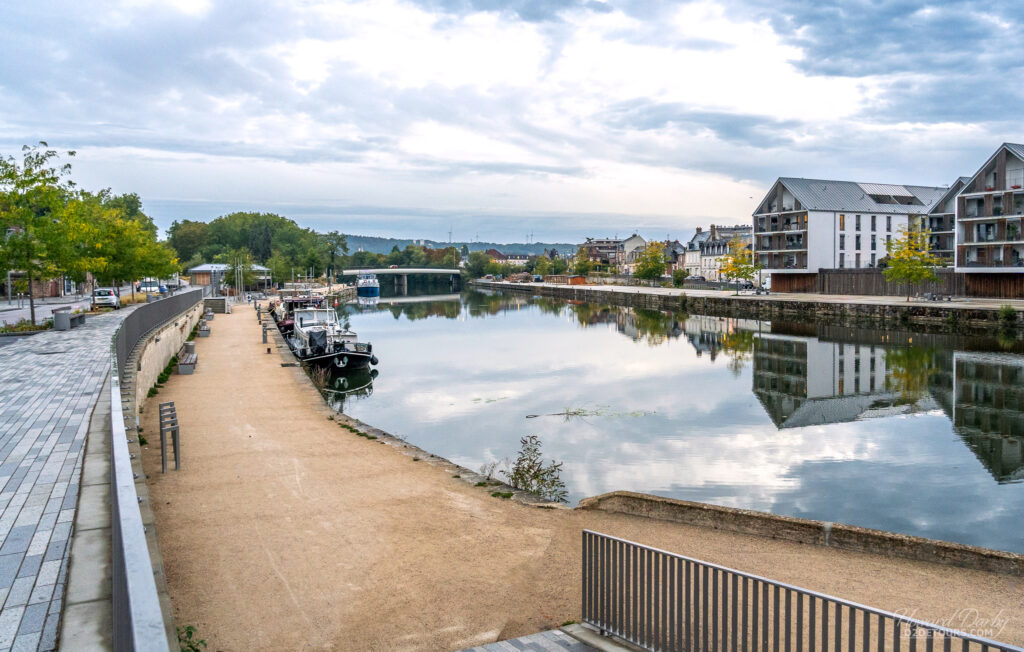
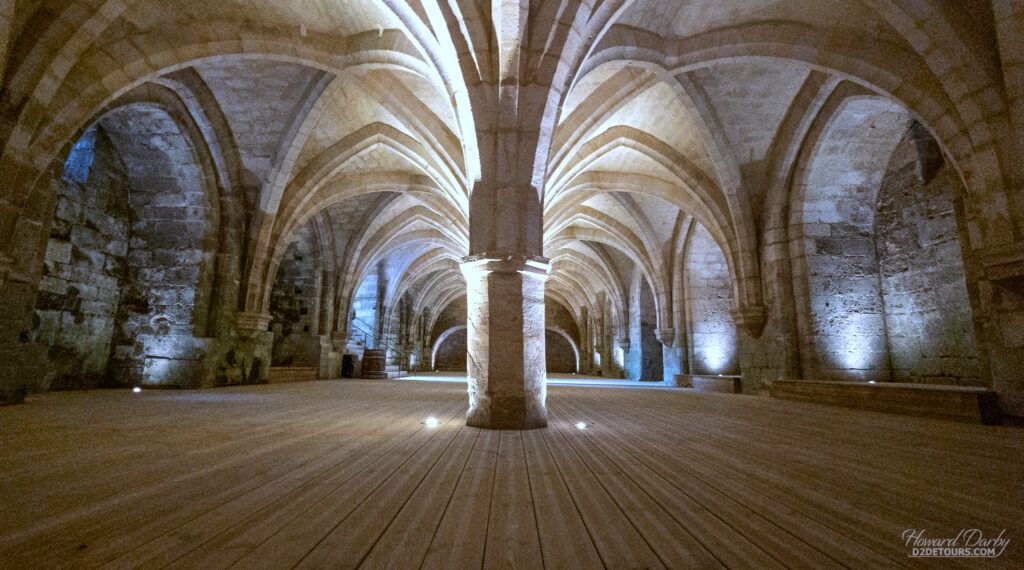
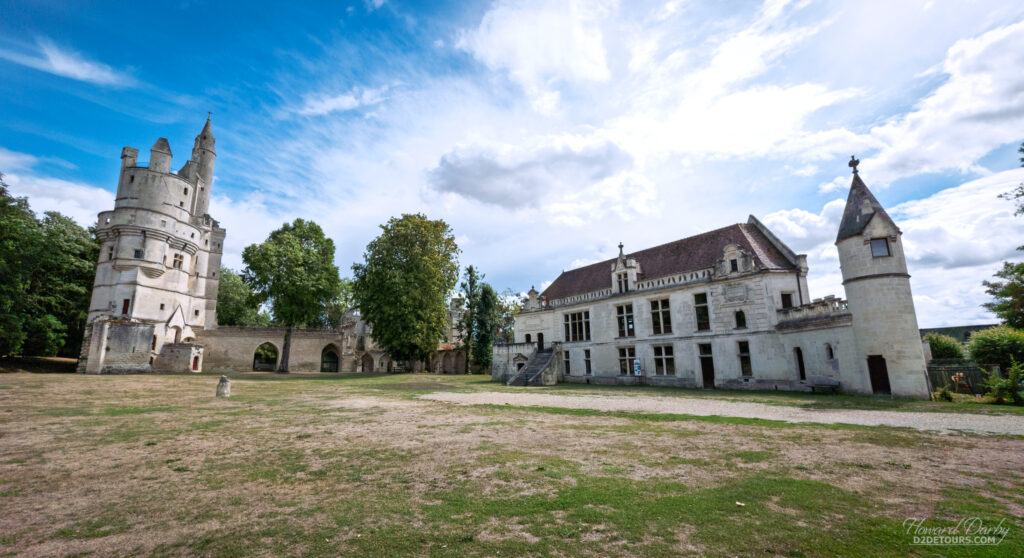
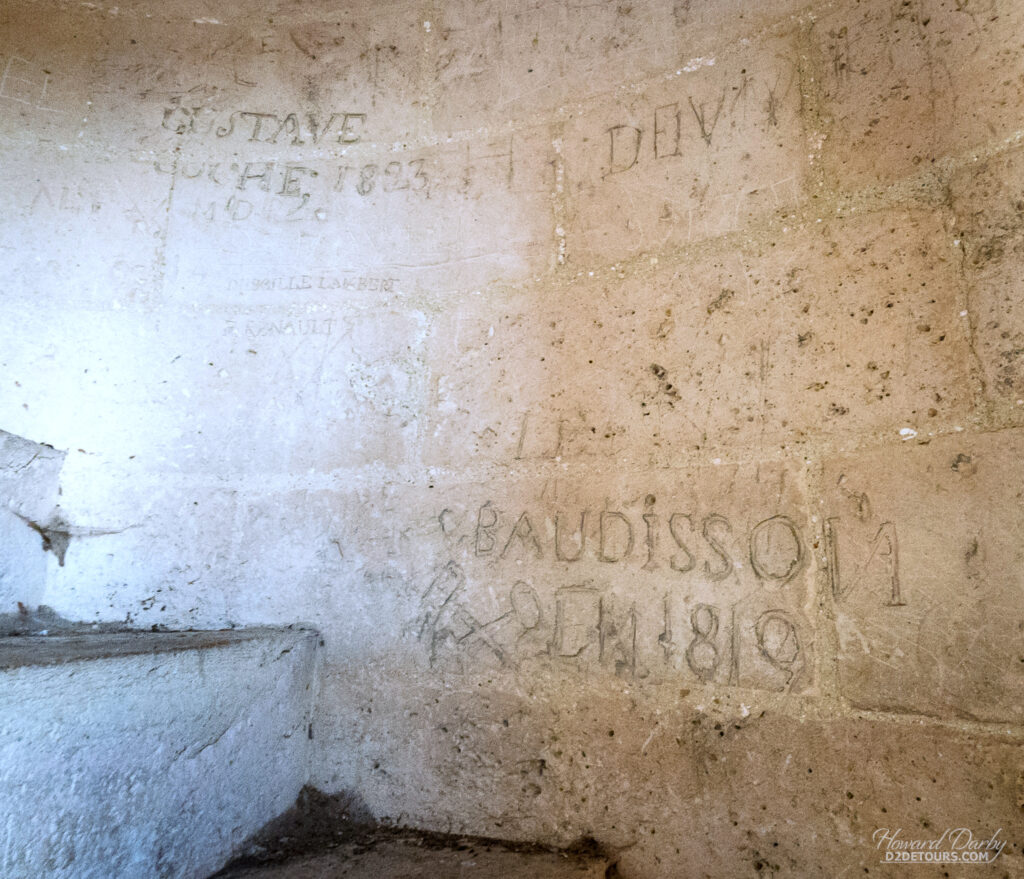
Fortunately, a short bike ride out of the city gave me a medieval history fix. The Château de Septmonts was built as a lavish country retreat and summer residence for the Bishops of Soissons. Construction started in the 13th century, and expanding across generations. The highlight, for sure, is the 45 m / 148 ft Donjon (Keep), which looks like it was copied from the pages of a storybook. I wish I had counted the number of steps it took to reach the top — my calves certainly remembered every single one of them the next day.
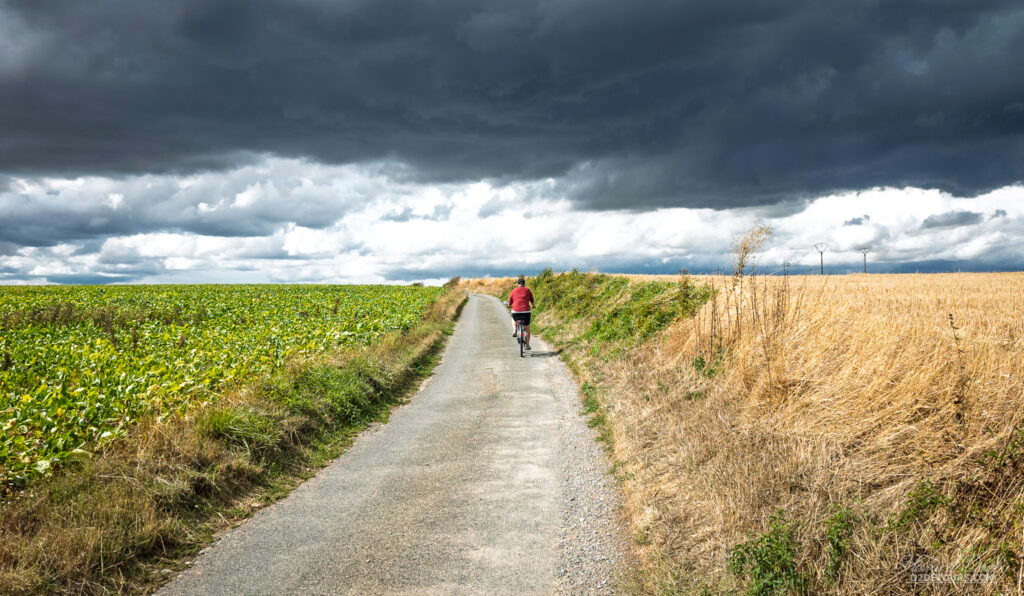
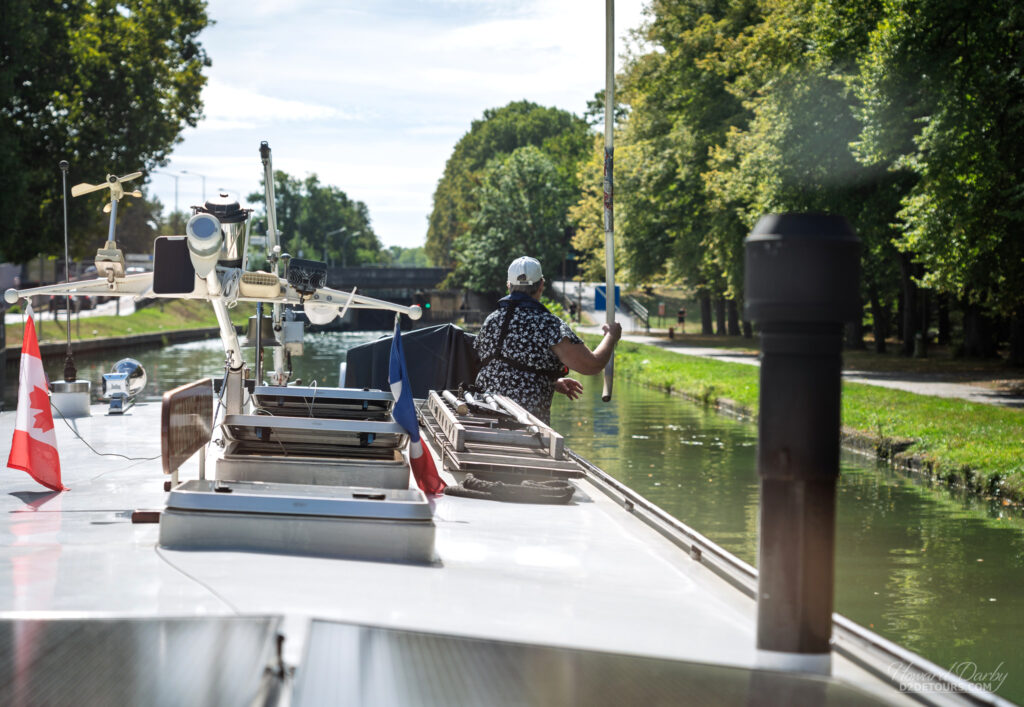
The next five days of our journey took us from Soissons to Sillery, where a few logistical challenges dictated exactly how we managed the route. Firstly, there are 16 locks along this stretch, and because we were travelling uphill, we were constantly ascending. Going up takes a bit more physicality; you have to muscle the ropes to keep the boat steady as the thousands of gallons of water necessary to lift your vessel rush into the chamber.
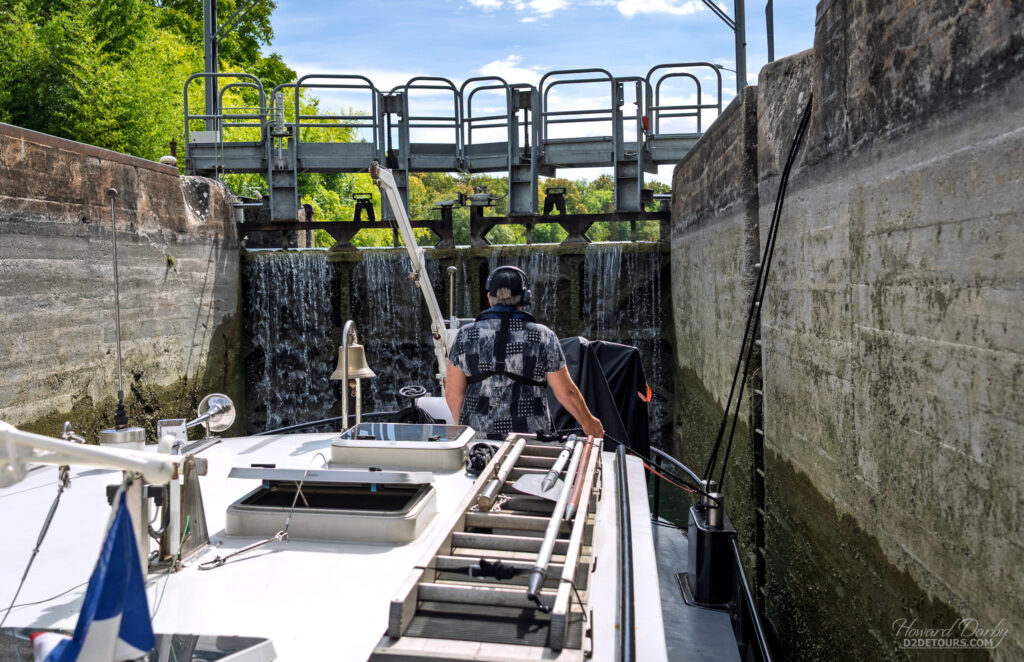
That effort was compounded by the placement of the wall bollards where we can place our lines. They are perfectly spaced for a 39-meter French péniche, but not so much for our 18-meter Dutch barge. With the bollards so far apart, I managed the line at the bow, leaving nothing for Howard to wrap around at the stern. He had to keep us steady using the rudder and throttle, requiring less physical strength but a whole lot of mental focus. The following drone video shows us transiting one of the locks – this was one of the few where Howard managed to reach a bollard at the stern
In addition to the locks, another consideration for us was finding suitable moorings. We are still travelling in tandem with my step-sister and her husband, and their 23-meter (75-foot) barge can’t just tie up anywhere. Furthermore, the stretch between Berry-au-Bac and Courcy consists of nine synchronized locks controlled by ground sensors, so stopping mid-flight isn’t ideal. And, finally, the clock was ticking: we were picking up friends at a spot on the side of the canal just past Sillery who were taking the train from Strasbourg to join us onboard for one night.
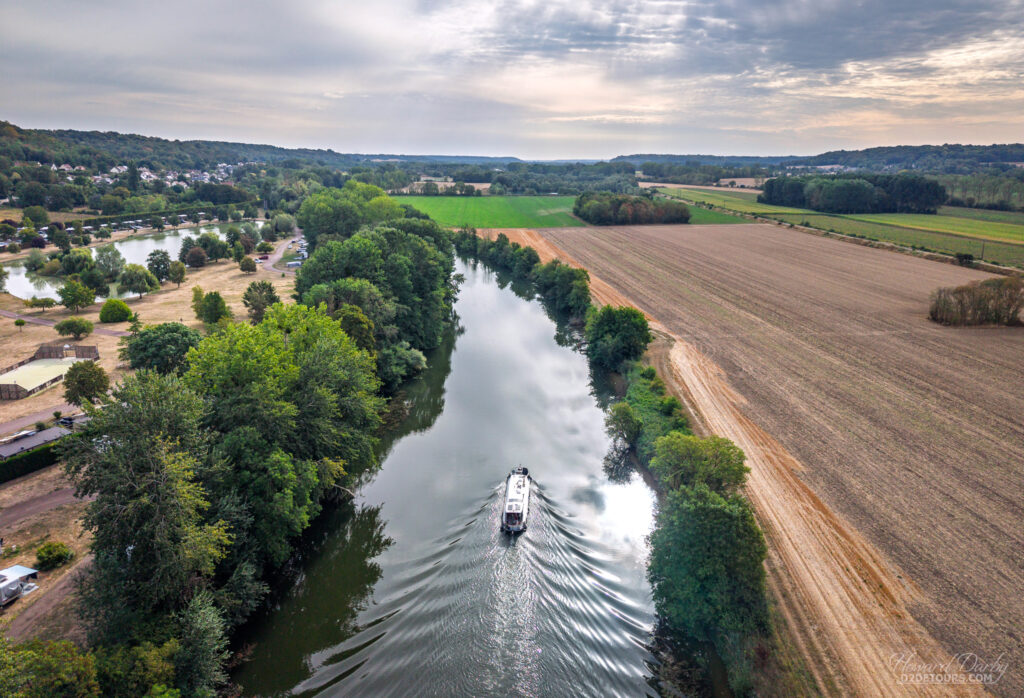
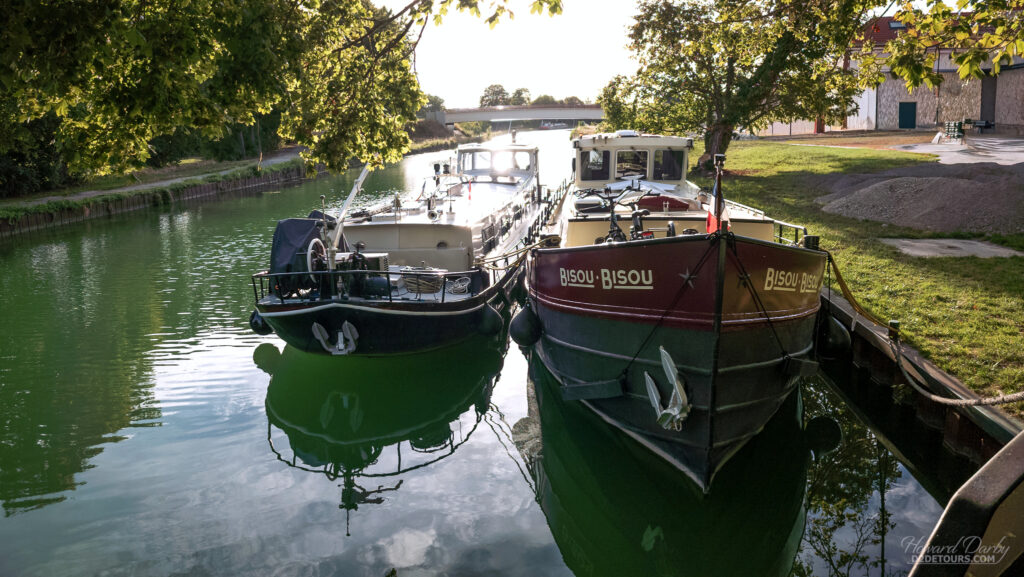
So we left Soissons, transitioned onto the Canal latéral à l’Aisne, and headed for Bourg-et-Comin. Just past the city limits at Celles-sur-Aisne, we navigated through a unique piece of history from the early industrial age (1841): a staircase lock. These two lock chambers share a single center gate. After ascending (or descending, as the case may be) in the first lock, the gate opens immediately into the second. For reasons I can’t quite explain, this double lock was one of the more stressful ones we encountered. Fortunately, we only had one more lock before we moored in Bourg-et-Comin for two nights. I didn’t need any history to love this spot — it was a picture-perfect corner of the canals, and we happily could have spent several more nights there.
We revelled in the two peaceful nights spent in Bourg-et-Comin because the gruelling nine-lock stretch to Courcy was just around the corner. Leaving Bourg-et-Comin, we tied up at the junction town of Berry-au-Bac for one night. The next morning, we turned in our remote control in the Berry-au-Bac lock and activated the gates for our turn onto the Canal de l’Aisne à la Marne.
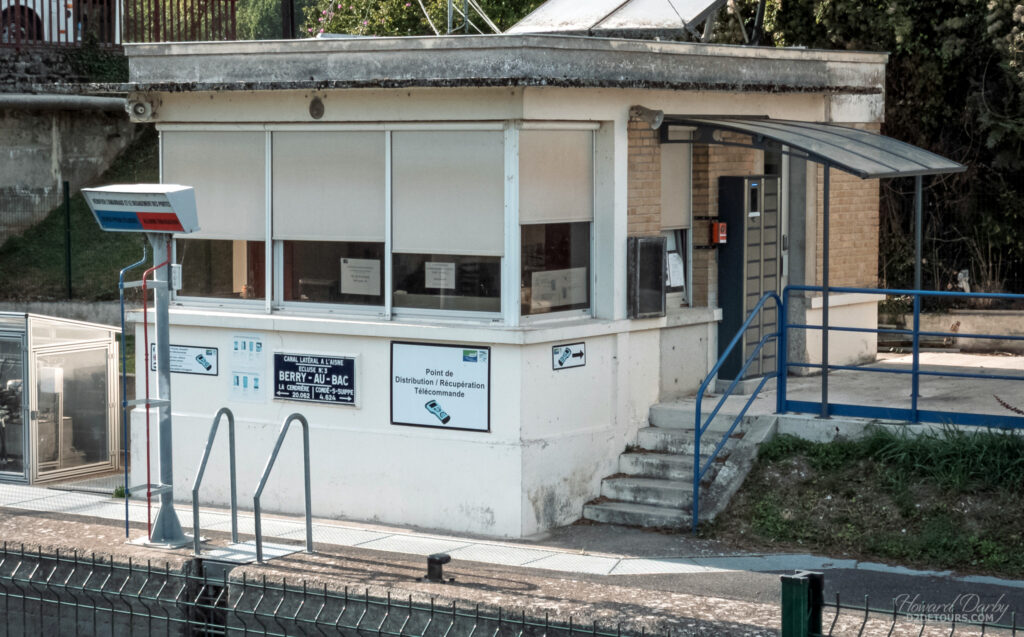
In a span of just 12 kilometres (7.5 miles), the waterway packs nine single automated locks back-to-back to manage the 28 m (92 ft) elevation gain. It was an absolute marathon. Howard barely had time to rev the barge back up to a steady cruising speed before we were slowing down again for the next lock. By the time we finally tied up in Courcy, my hands were so tired from gripping the ropes I wasn’t sure I could hold a glass of celebratory wine, but I powered through!
Courcy to Sillery was fairly uneventful. The four locks along this stretch are activated with the perches, and other than wondering just how many hands had grabbed those grubby poles, they are a very efficient way to move through the locks.
While we had officially entered “Champagne country” once we passed through the Berry-au-Bac lock, it wasn’t until we got closer to Sillery that we started to see vineyards. With 100% on the échelle des crus (ladder of growths) scale (the historical rating system used to rate Champagne vineyards on a village-by-village basis), Sillery is classified as a “Grand Cru” village. Laura and I biked over to one of the family-owned champagne houses hoping to sample a bit of the bubbly, only to find it locked up tight — apparently we were supposed to have called ahead and booked our visit. Oh well, as we’re spending the next six months wintering in the region, I suspect there will be other opportunities.
The last piece of our logistical puzzle from Soissons to Sillery was picking up friends who were coming for a quick visit. We met Yarrow and Greg on Crete back in the fall of 2024, and immediately bonded over our mutual love of ancient ruins. Serendipitously, during that initial meeting, we discovered that both couples were booked on the exact same 2026 Antarctic cruise! Yarrow and Greg were currently spending a month in Strasbourg, and jumped at the opportunity to experience a small taste of our new barge life. For a variety of reasons (mainly train schedules), a canal-side mid-afternoon pick-up in the tiny commune of Sept-Saulx proved to be the easiest connection point.
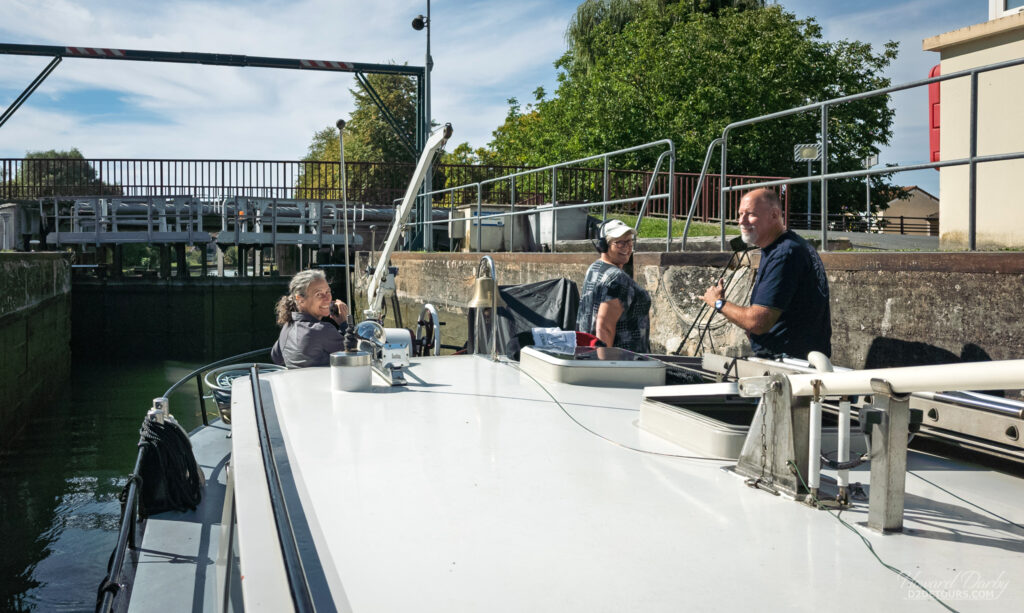
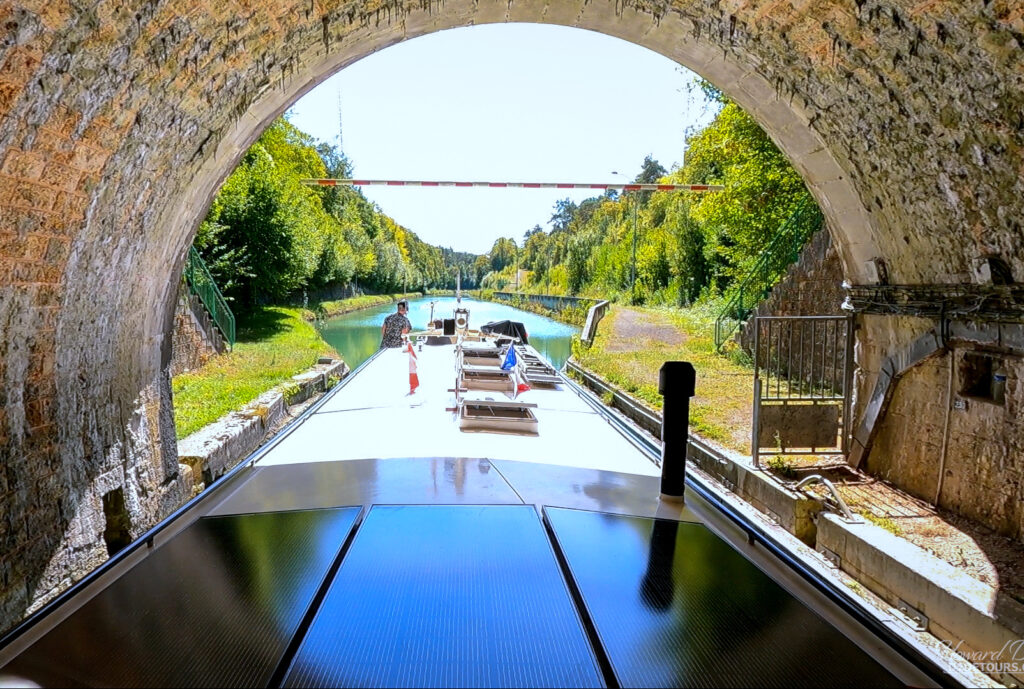
The Billy Tunnel was their grand introduction to the ouvrages d’art — I love this term; the literal translation is “works of art,” but it is actually the official French terminology for civil engineering structures. The Montagne de Reims was a significant geographic stumbling block to meeting industrial France’s expanding shipping needs. A lack of available water negated the possibility of a standard canal and lock system to climb over the ridge, and using horse and cargo wagons to bypass the mountain was both slow and expensive. So, if you can’t go over it, and you can’t go around it—you’re gonna hafta go through it!
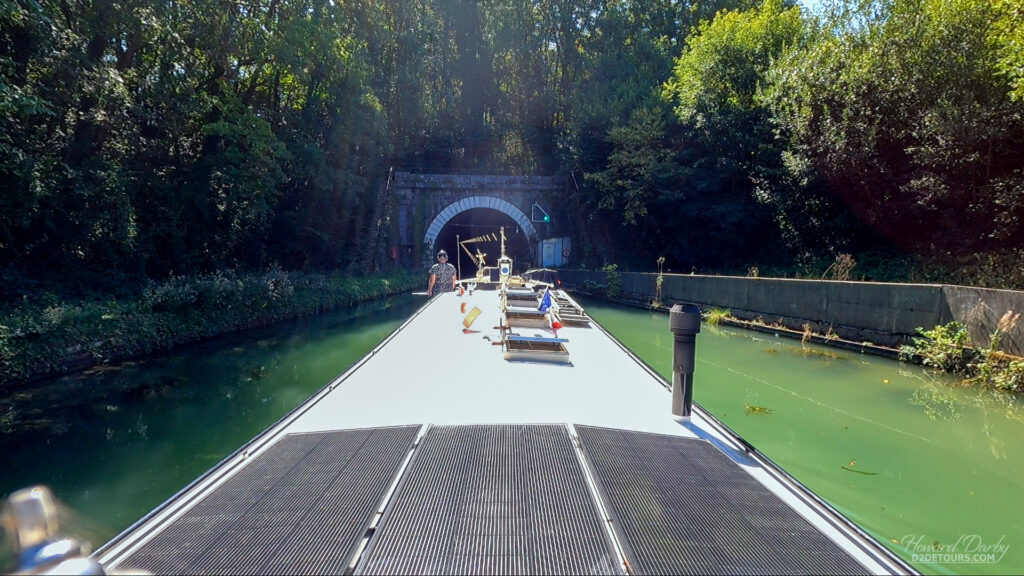
The 2,302-meter (1.4-mile) engineering marvel known as the Tunnel du Mont de Billy was constructed between 1840 and 1856. It is an underground canal tunnel designed to accommodate Freycinet-class boats via one-way traffic (although interestingly, it was designed more than 30 years before those dimensions actually became law!).
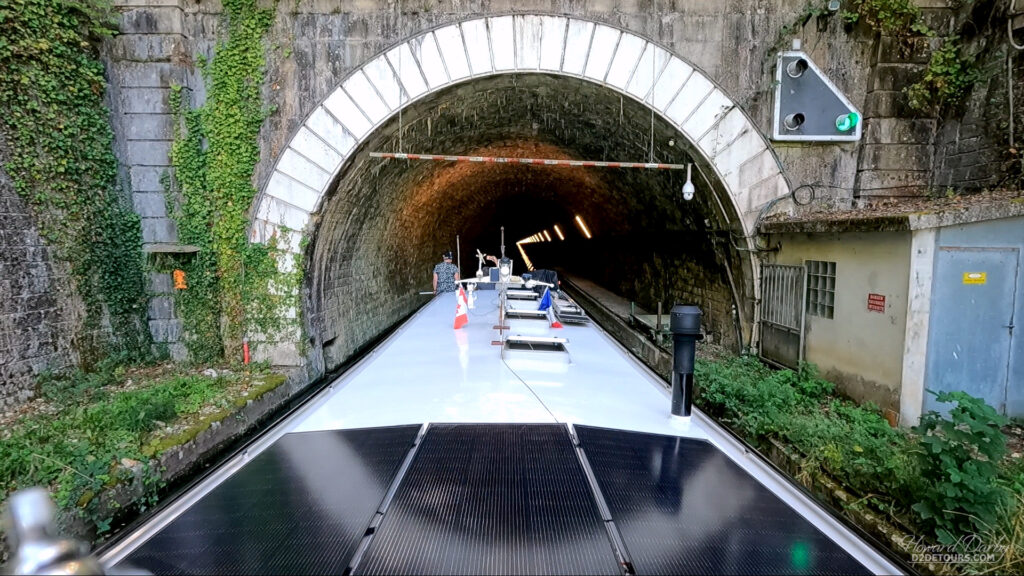
A towpath along the side originally allowed horses to pull the barges through. In 1885, a continuous towing cable system was installed. Electric rail tractors were introduced in 1933, and finally, in the 1970s, modern ventilation fans were installed to allow self-propelled boats to safely navigate through the rock.
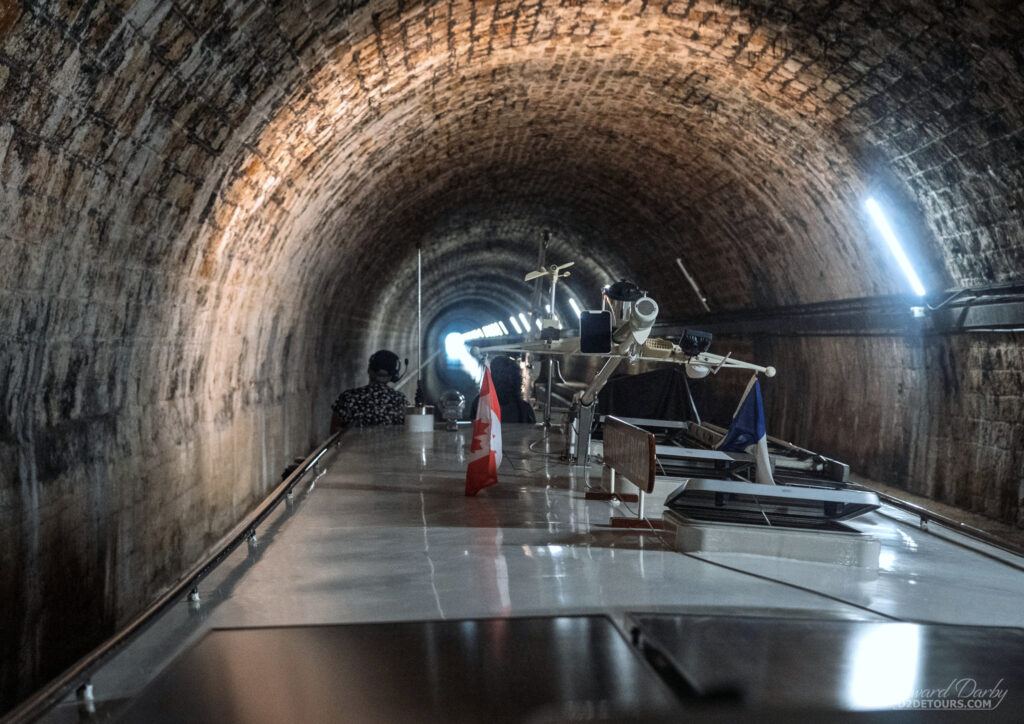
The tunnel was so incredibly well-built that during WWI, it served as a bombproof shelter housing French gunboats, supply barges, and even a floating hospital. Thankfully, the tunnel is well-lit today, though we still kept our own searchlight blazing at the bow, because it is a slow, claustrophobic trip through history.
We overnighted not too far from the Billy Tunnel and the next morning set off for Châlons-en-Champagne. Our barge is ideally set up for two people, but we can only offer a sofa bed to our guests, so we said our goodbyes to Yarrow and Greg in Châlons where they caught their train back to Strasbourg. We loved having them on board, even for a short visit, and may have piqued their interest in getting their own canal boat in the not-too-distant future.
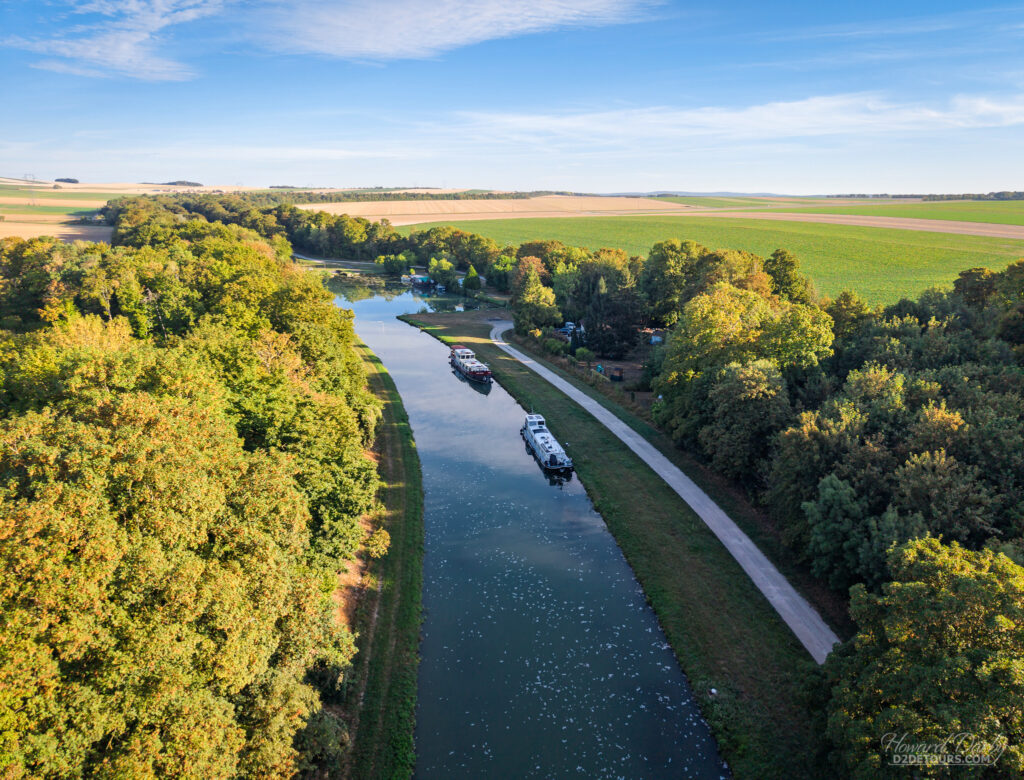
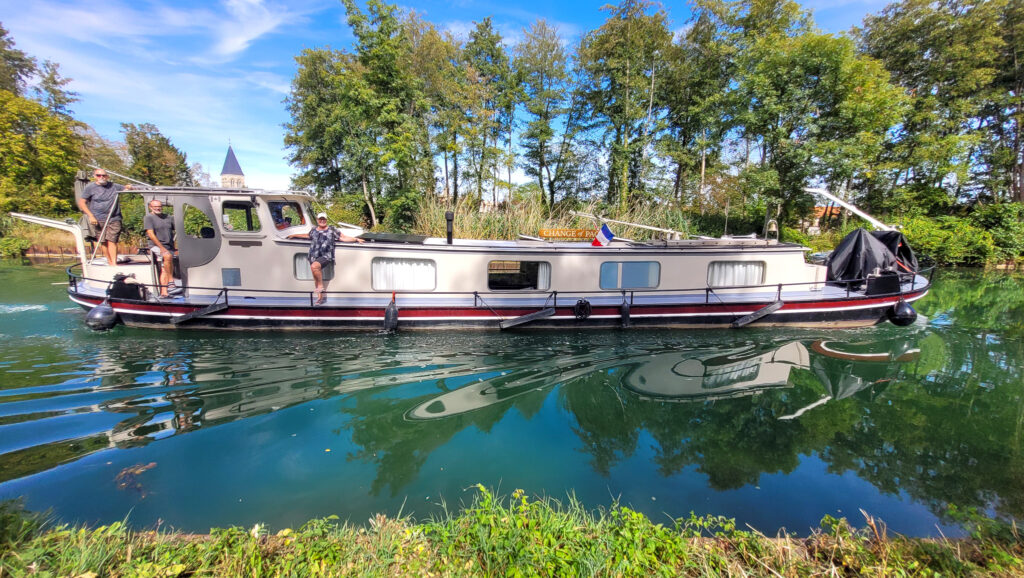
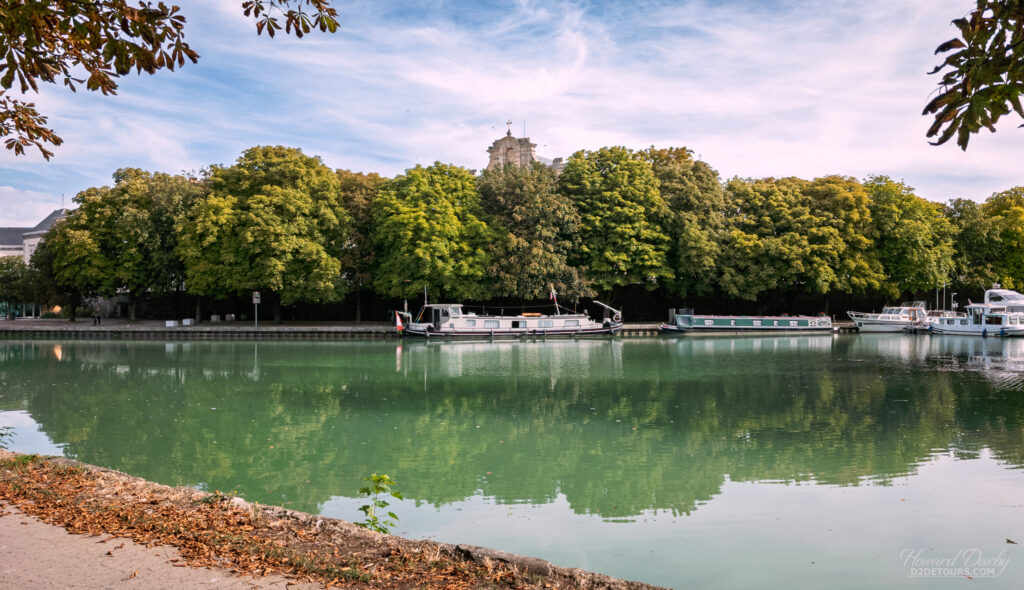
We are now officially settled in Châlons-en-Champagne for the winter (tucked in until the end of March). The commercial canals do remain open during the winter (and one of them passes through Châlons), but it is a fairly chilly prospect navigating them when the mercury drops into single digits, so we’re happy to make this our base for the next six months. While Change of Pace might be stationary, we won’t be. We’re contemplating a little holiday to Ireland, we looking at taking the train to Bruges for some winter markets, and we’ll head back to Canada for a visit. We also need to check out the champagne houses in nearby Épernay and Reims!
À un de ces quatre !
Follow along on our Calm Canals Instagram, Facebook or YouTube pages.