
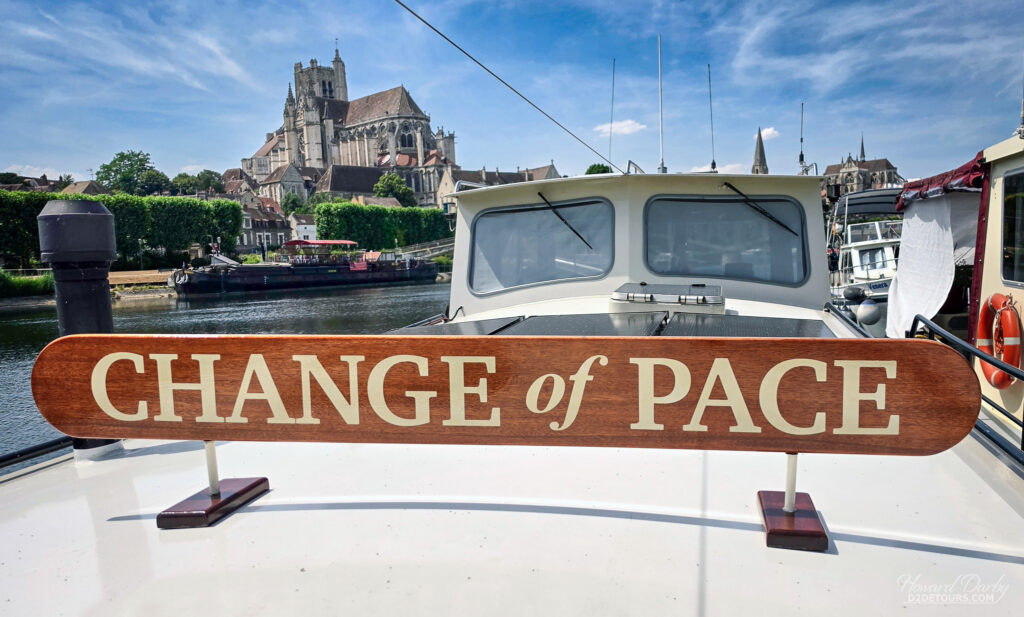
We finished our boat training in the UK and headed off to take possession of our new floating home just as a ferocious “Omega” heatwave was enveloping Europe. The average temperature in Auxerre, France, in June is 23°C / 73°F. When we arrived on June 18th, it was 38°C / 100°F! More on that later; let’s start with a few preliminary steps we needed to get out of the way before we settled on Change of Pace (CoP).
First up: the mandatory licensing requirements for operating a vessel on Europe’s inland waterways.
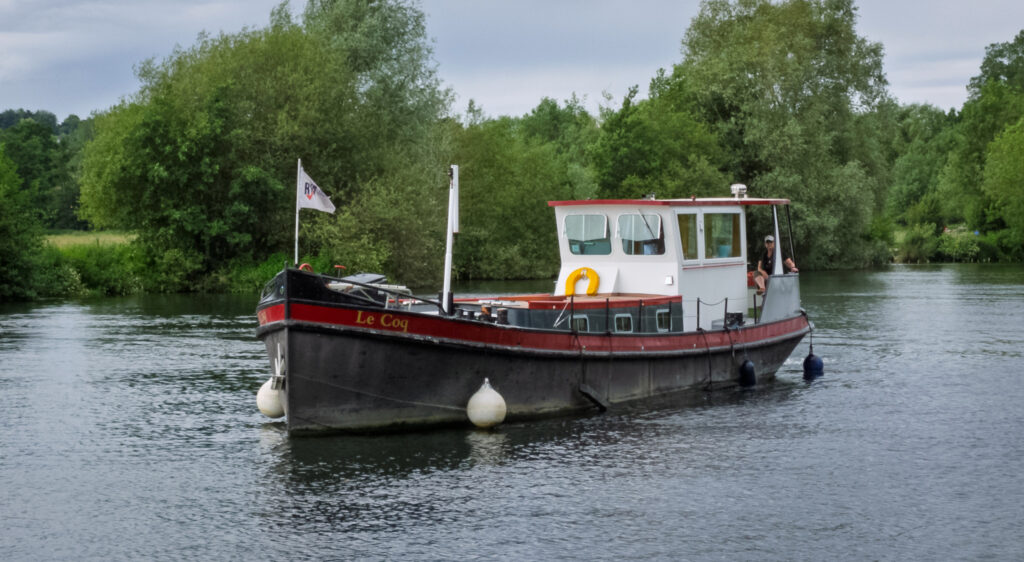
Located within the grounds of the National Sports Centre, on the banks of the Thames as it winds through Marlow, UK, sits the Bisham Abbey Sailing School. It has operated as a commercial RYA (Royal Yacht Association) training centre for nearly 35 years and, in addition to sailing lessons (as the name implies), also offers powerboat handling courses on a variety of vessels. One of those vessels is a 17m Dutch barge. How perfect, Change of Pace is just over 18m!
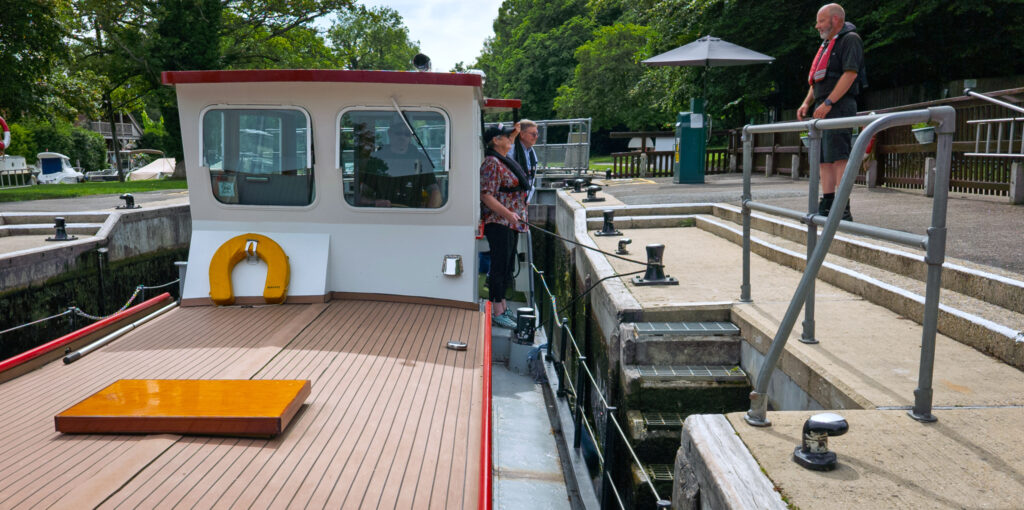
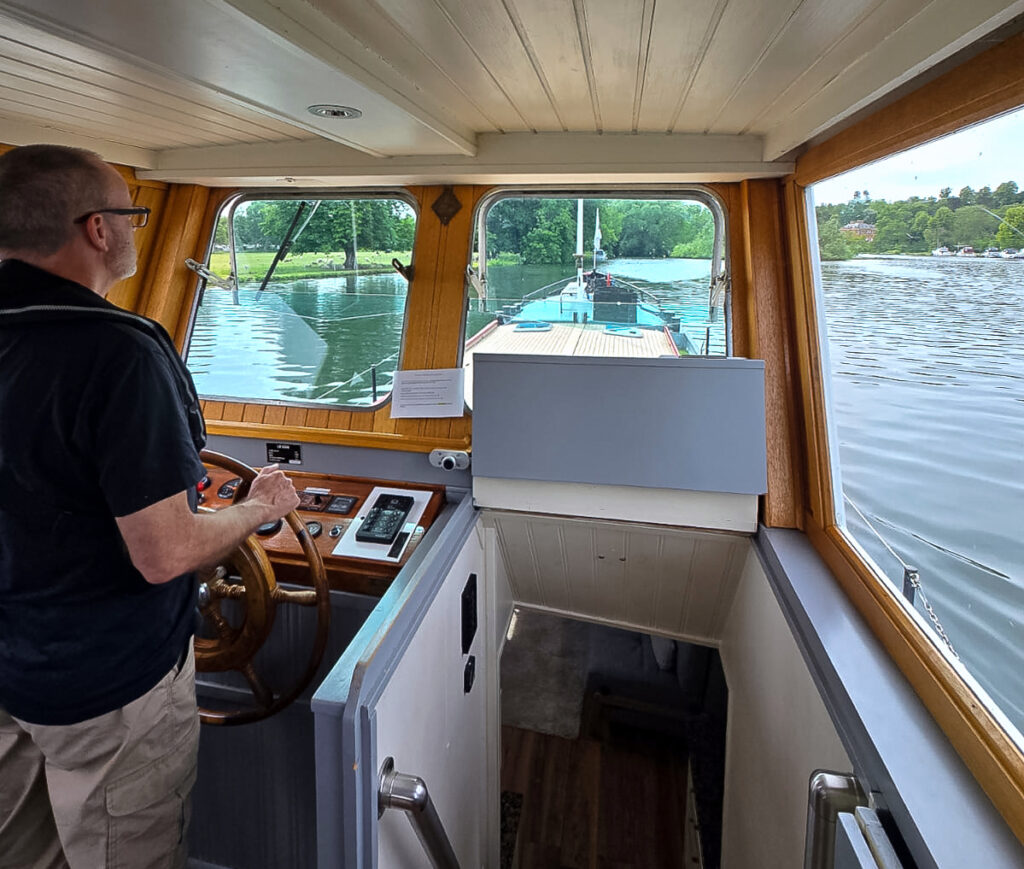
As only one person on board is required to have inland waterway handling certification, Howard took the two-day helmsman course, and I joined him for a one-day crew course. As luck would have it, it was just Howard and one other fellow taking the helmsman course, so our instructor invited me to tag along for the second day of training, too.
These two days of hands-on training were just the final step in a fairly lengthy certification process. Before the Bisham Abbey training, Howard had to complete an online theory course and test (roughly six hours) for an ICC (International Certificate of Competence – officially named the International Certificate for Operators of Pleasure Craft) with the CEVNI (Code Européen des Voies de la Navigation Intérieure – European Code for Inland Navigation) endorsement.
And, in addition to boat handling certification, he needed a VHF radio license, which was another online course and test (four-ish hours), with certification granted after roughly another three hours of testing by the instructor at Bisham. By comparison, I got off easy. I needed to know how to turn the engine on and off, pilot the boat on a straight course, perform a 180° turn, understand (not necessarily perform) a man overboard retrieval, and manage the ropes for locks and docks. I feel compelled to tell you that I did successfully perform a man-overboard retrieval, so Howard feels somewhat confident that I could fish him out of the water.
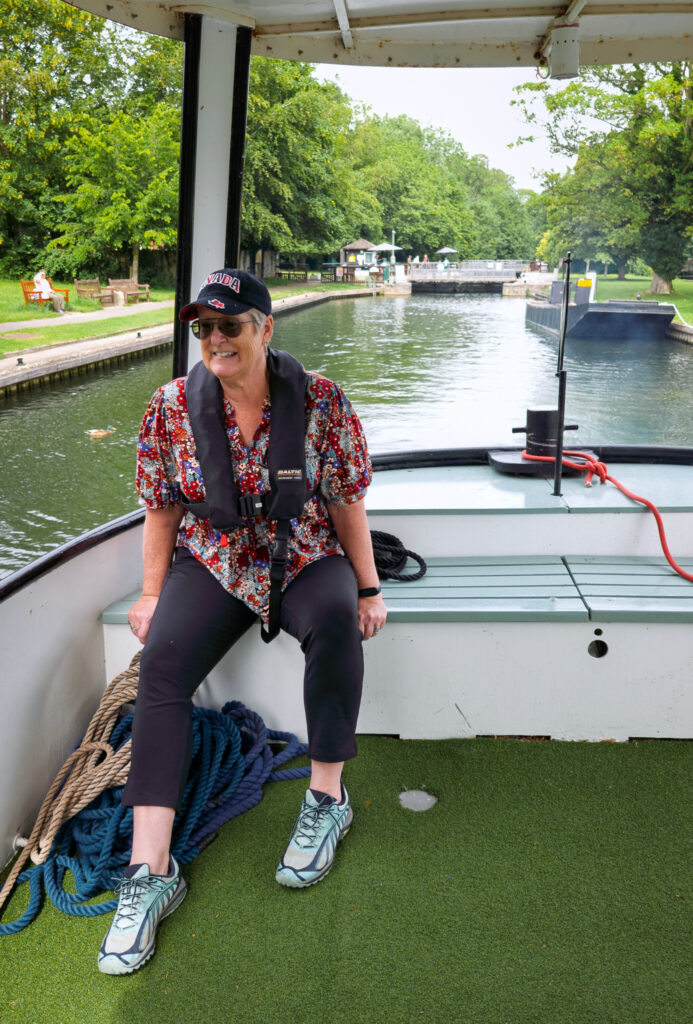
The fourteen hours of training in Bisham (plus Howard’s additional three for VHF certification) were draining, to say the least, but we just kept focusing on the prize awaiting us in France.
Next: Bureaucracy
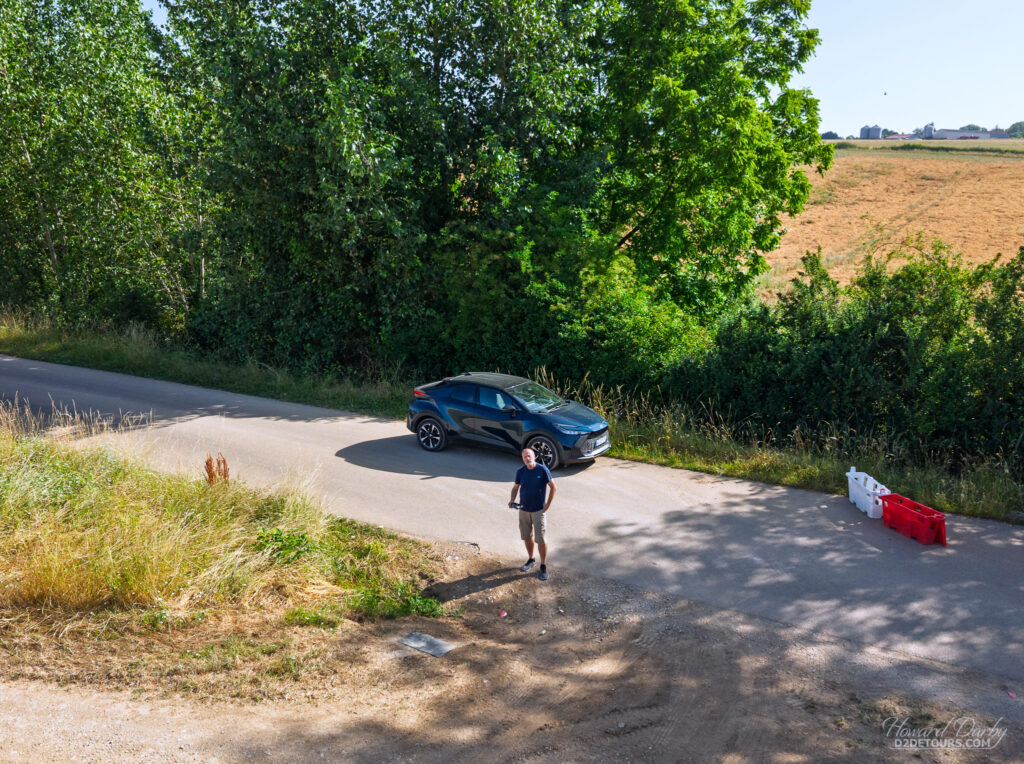
When we decided to buy Change of Pace (CoP) back in November, we’d understood that changing ownership was going to be a simple administrative process. Turned out we were half right. From the day she was built, this vessel has been listed on the Dutch Kadaster, the property registry for the Netherlands. The Kadaster has been keeping these types of records since 1832. We wanted to retain that historical link, and fortunately, with the assistance of a broker, the transfer of title and registration into our names was a completely painless process.
Insurance, now that gave me a few sleepless nights. The EU recently introduced new restrictions on foreign ownership. While they don’t necessarily oppose it, the caveat is that the foreign owner must have a brick-and-mortar (ie: not a post office box) EU address. Despite our intention to live full-time aboard CoP, a marina address was not sufficient proof of residency. We were flat-out refused coverage by six different insurers before I finally found one that would accept us, albeit with a premium four times higher than what an EU resident would expect to pay! But we are now the registered owners of a fully insured vessel. As a quick aside, as I’m sure some of you may be wondering how we are handling the Schengen 90/180 rule, we are currently on a six-month, renewable French visitor visa.
And now the requisite history lesson in any post I write …
In 1850, Gerrit Jans Barkmeijer opened Barkmeijer Shipyards, a repair yard in Stroboos, Netherlands. Over the next several years, together with his sons, he acquired a few more yards in nearby towns, branching into wooden praam (barge) construction – the flat-bottomed vessels farmers hired to transport their agricultural products and livestock along the inland waterways.
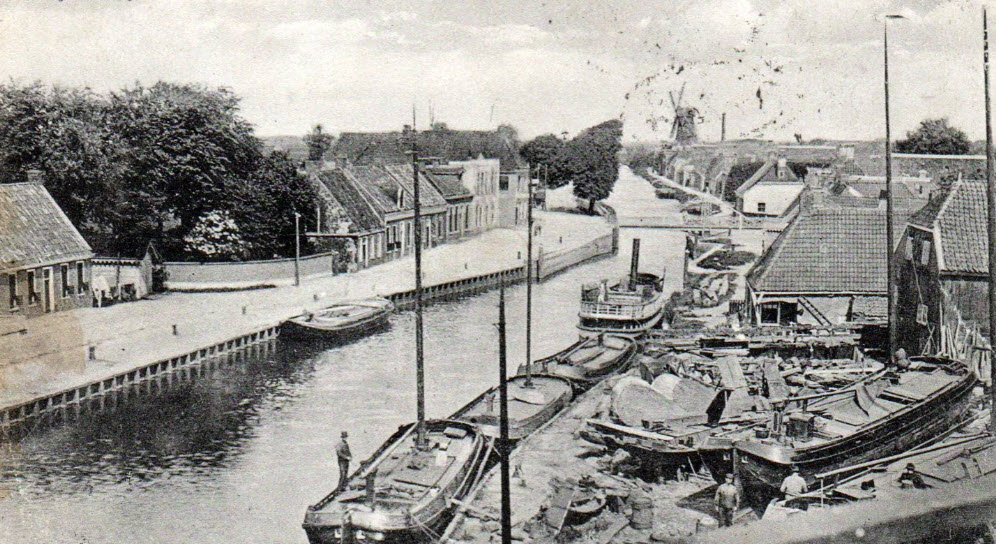
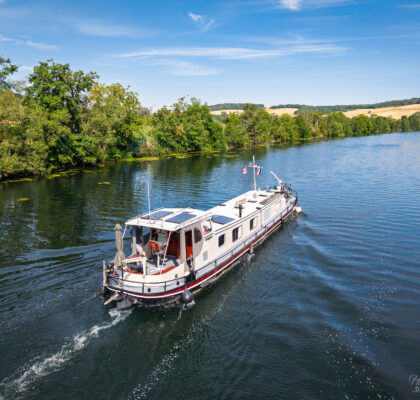
By 1900, wooden barge construction gave way to steel. Seventy years later, this family-run enterprise had graduated from small canal boat construction to 100 m x 16 m (328 ft x 52 ft) seagoing vessels. To give that a bit of context, our barge is 18.60 m x 3.55 m (61 ft x 12 ft). In 1987, the last Barkmeijer to run the company passed away. While the new management managed to weather the financial crises of the late 1980s and 2008, by 2017, they found themselves overextended. In 2018, the shipyard that the Barkmeijer family had built declared bankruptcy.
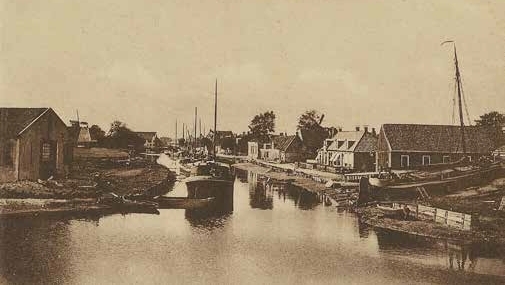
Our canal boat was built by the Barkmeijers in 1927 in Groningen. She was an open barge designed for hauling produce (beets and potatoes) and, with her slightly narrower-than-average width, was perfectly sized for maneuvering through the small canals cutting through the farmland in Friesland. Her distinctive size and low freeboard (the distance from the waterline to the upper deck) make her easily recognizable as a northern Dutch-built barge.
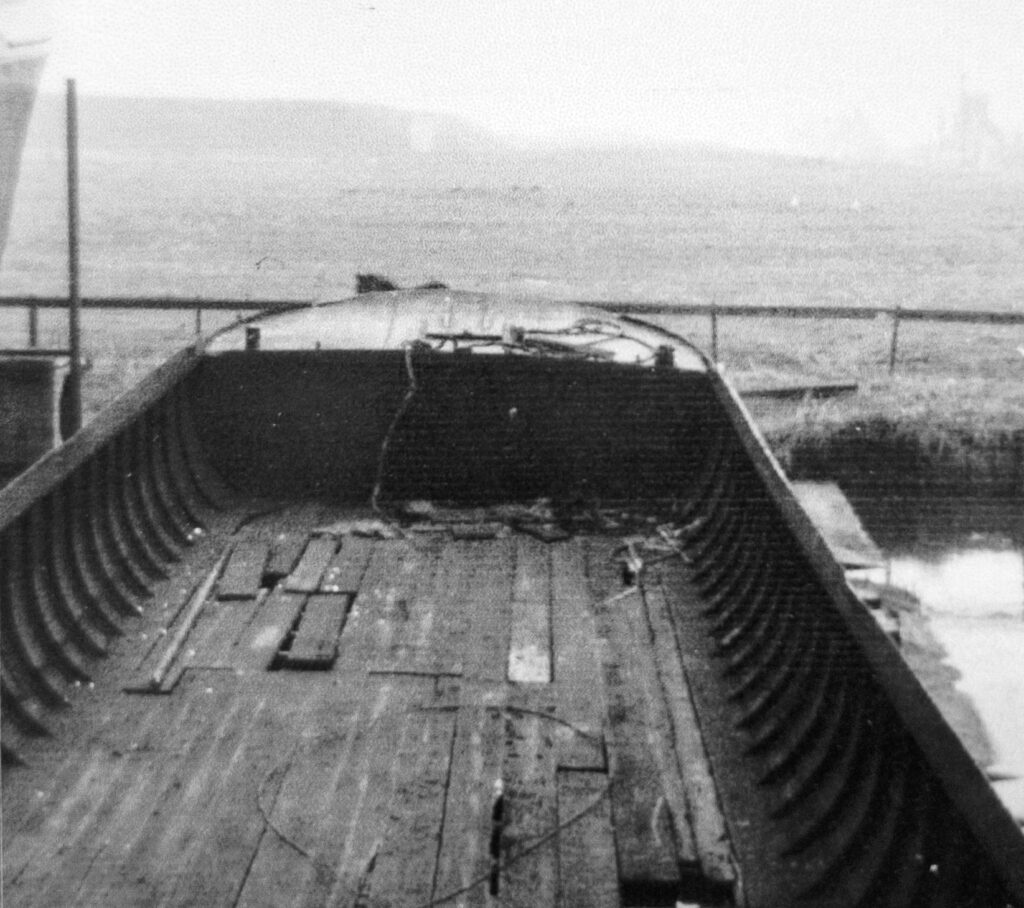
The De Lauwers II earned her keep on the Dutch waterways until the late 1960s, when she was converted to a “motor pleasure craft” and renamed Vrouwe Marie Christina.
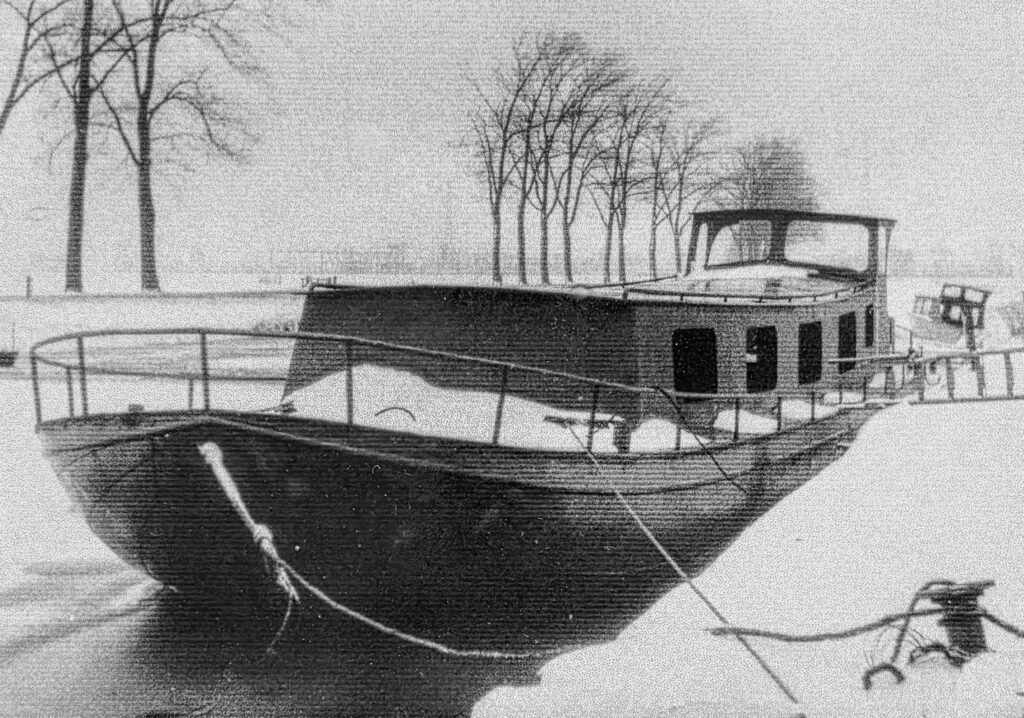
Near as we can tell from photographs left on board, she underwent a few remodels/retrofits between 1974 and 2019, when she was sold again and christened Lady Ferne.
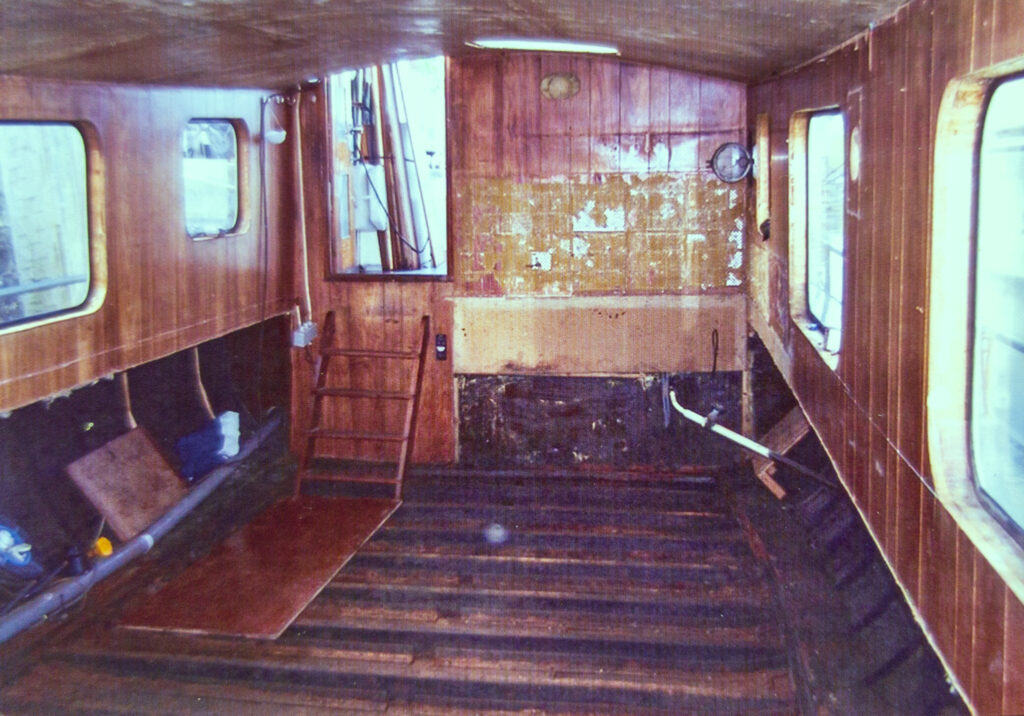
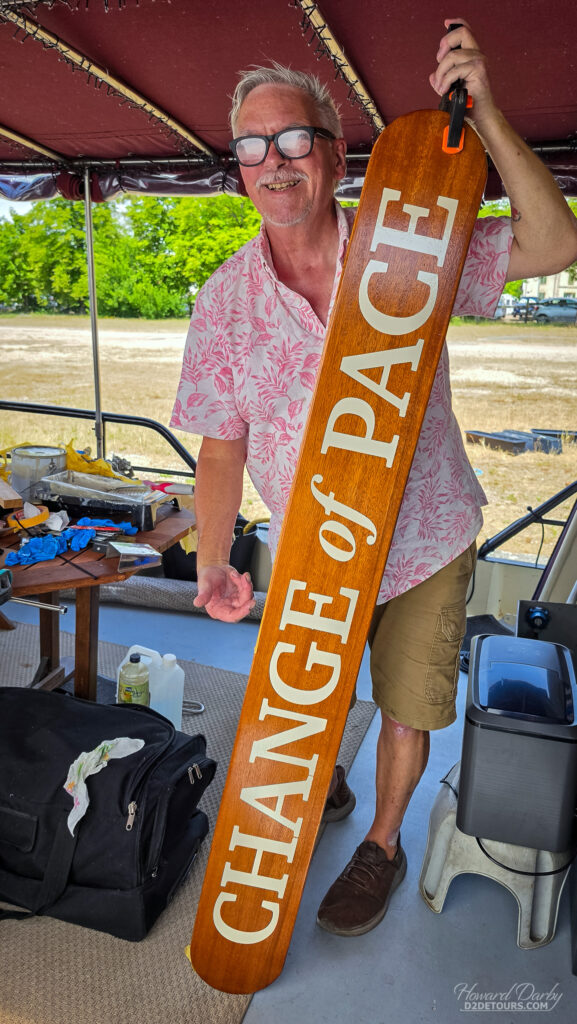
My step-sister and her husband, Laura and Boyd Godfrey, acquired her in 2022 and dubbed her the delightful and apt name Flat Bottomed Girl. You can click this link to read about our visit with them aboard FBG in 2024, where we first became interested in living this lifestyle. Now, in 2026, we have taken over stewardship of this piece of history and are currently keeping an Amazon delivery person gainfully employed as we outfit Change of Pace to meet our needs.
Bienvenue en enfer (Welcome to Hell – sassy French for It’s hot!)
When we stepped aboard CoP, we had grand plans for a couple of weeks exploring the town of Auxerre and the surrounding countryside by e-bike, and practicing our newly acquired helmsmanship skills on the canals. The weather gods did not get the memo. The mercury has not dropped below 38°C / 100°F since we arrived, and several days have set new heat records for June (ie: 41°C / 106°F).
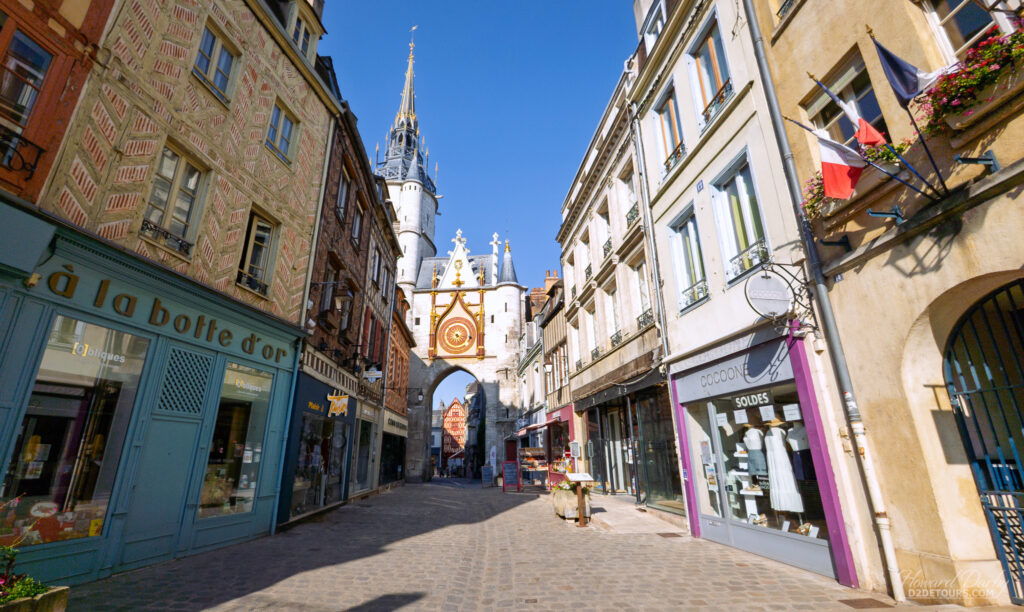
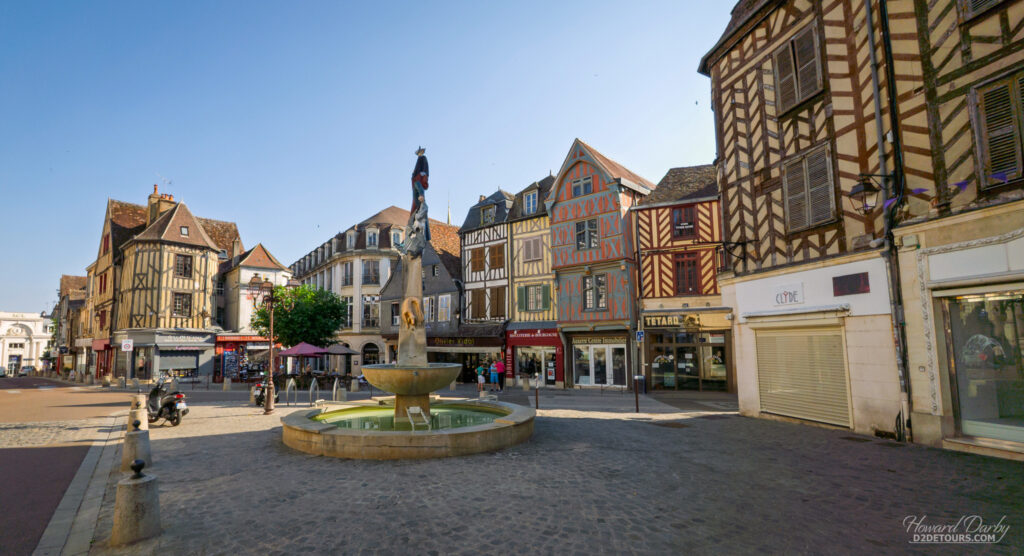
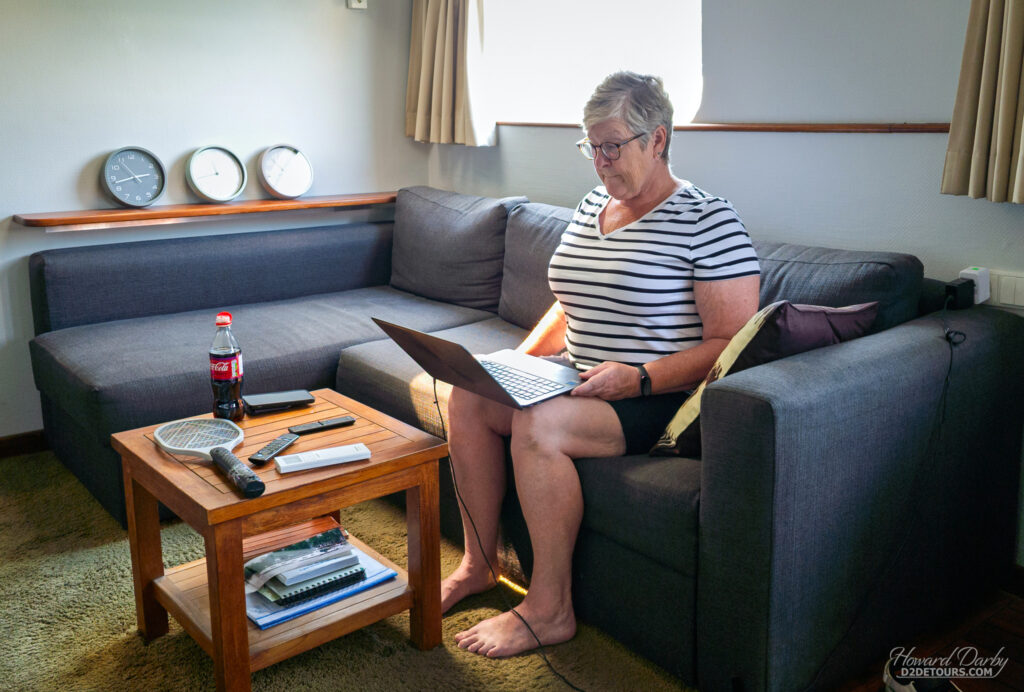
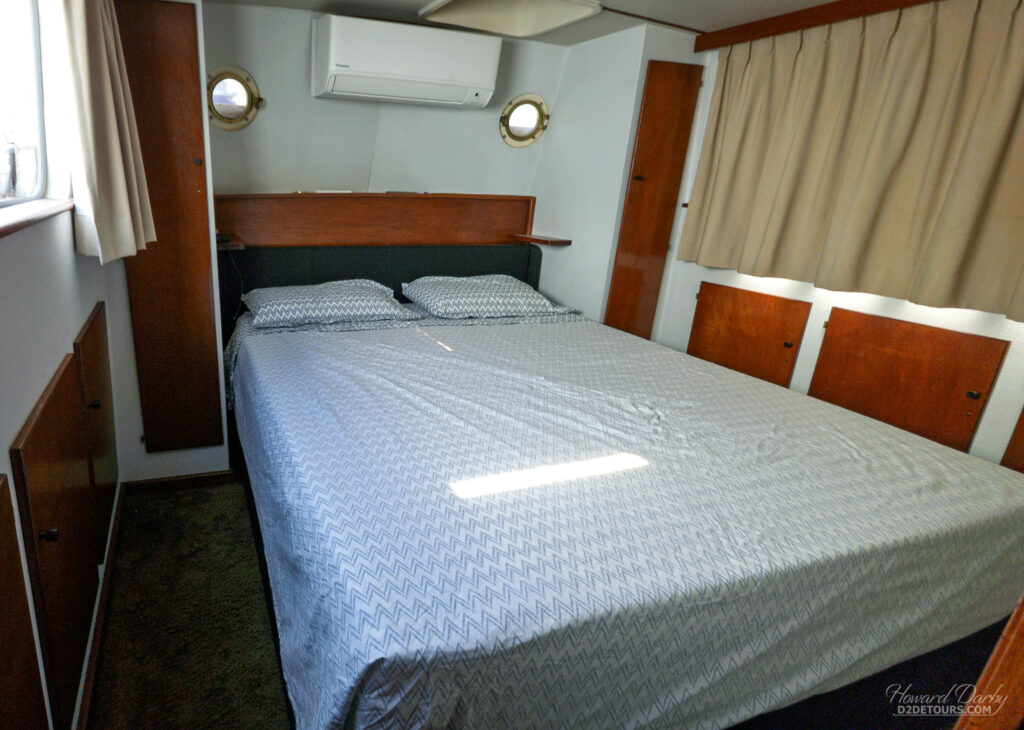
This is not the first time France has suffered from a brutal heatwave. In 2003, Europe experienced the hottest summer ever recorded since the drought of 1540! Approximately 72,000 heat-related deaths occurred across the continent (15,000 in France alone) between July 20th and August 20th. That August, temperatures exceeding 40°C / 104°F were recorded for eight consecutive days in Auxerre. In 2019, two separate heatwaves hit, one in late June and another in late July, during which time France experienced temperatures in excess of 45°C / 113°F for the first time in its recorded history. This type of heat is a challenge for a country that is air-conditioner-averse (less than 25% of homes have AC). Laura and Boyd had no such qualms, and installed AC units in both the main salon and the bedroom soon after they bought the boat – hallelujah!
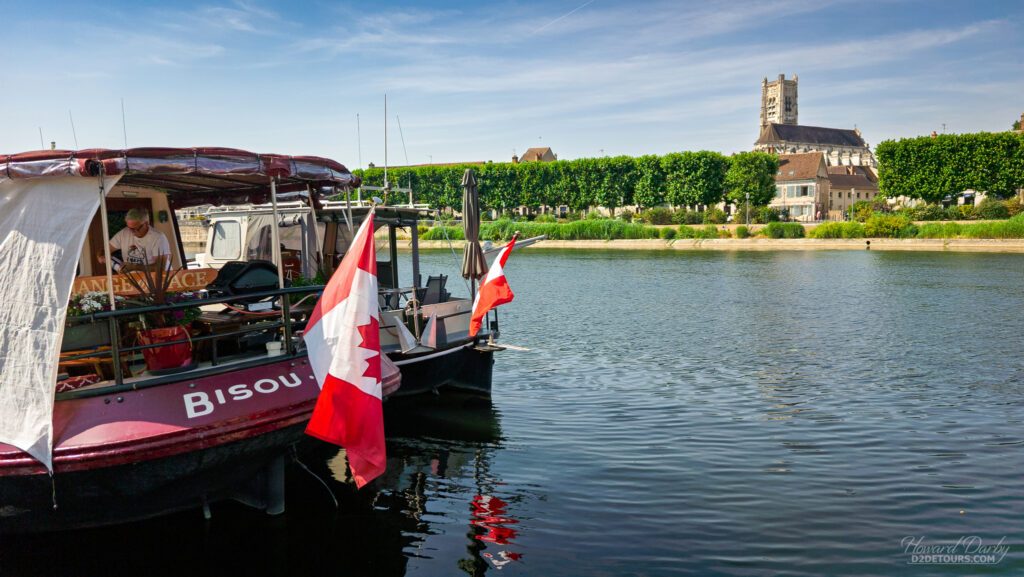
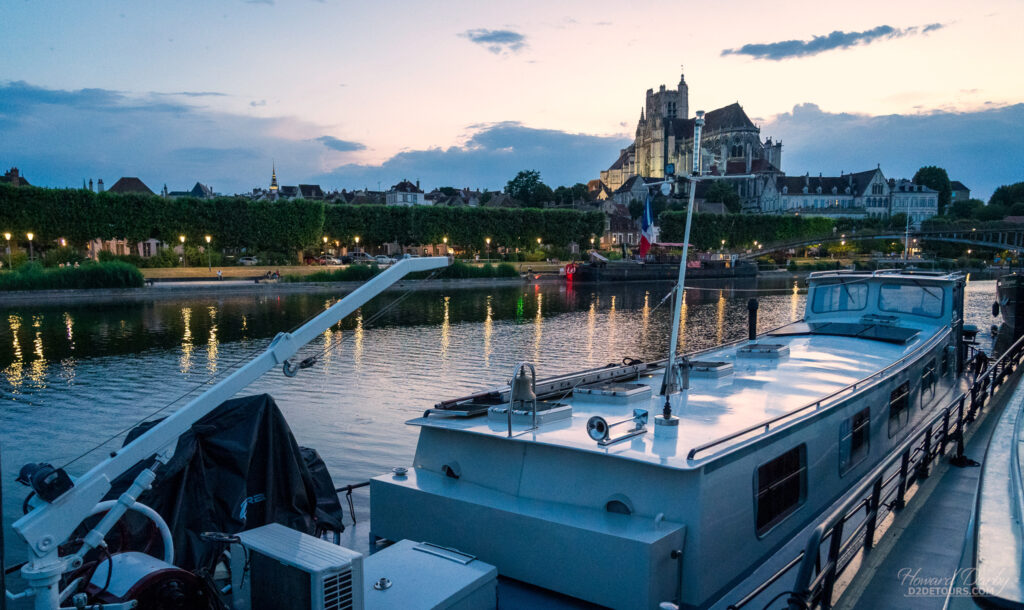
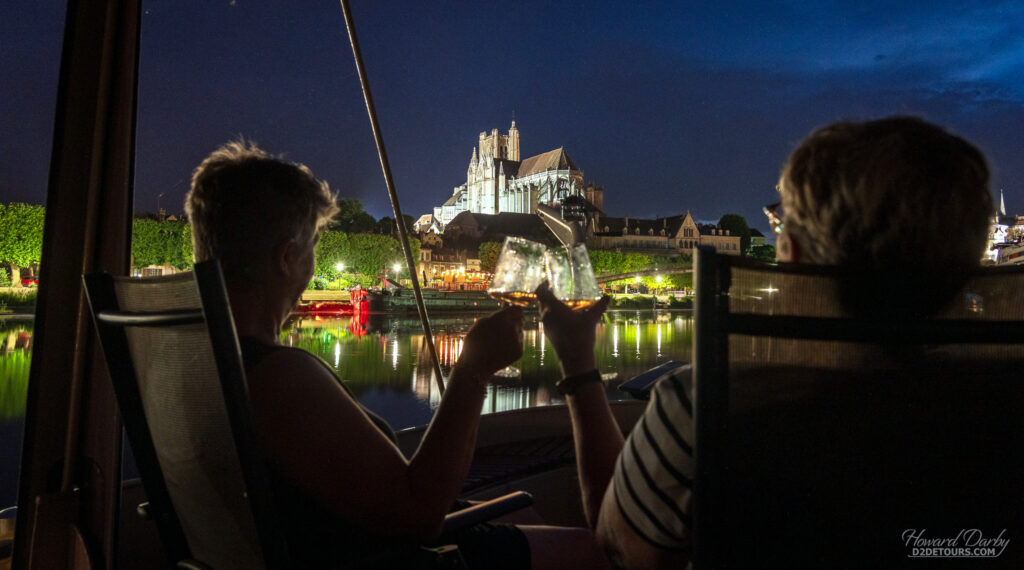
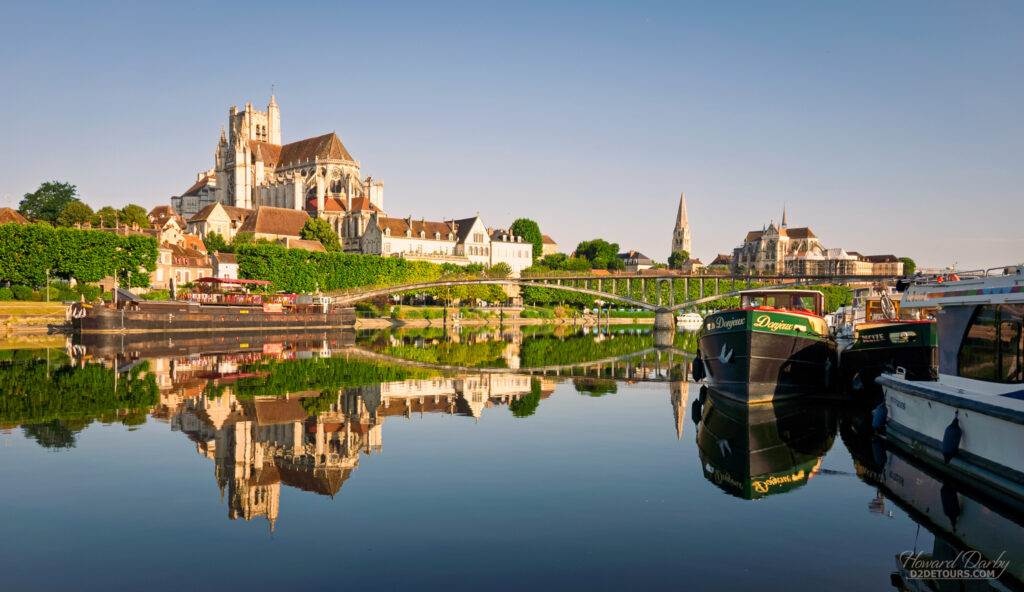
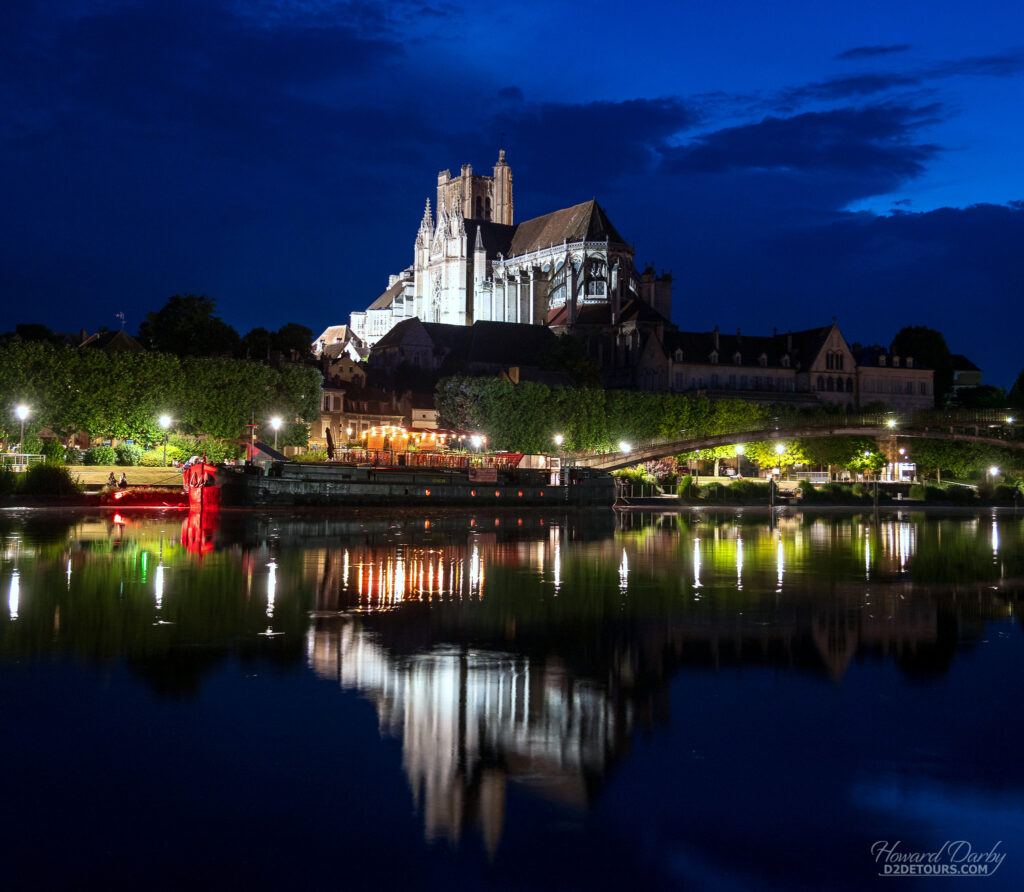
Temperatures are forecast to drop to a chilly 28°C / 82°F over the next several days, and we hope to start venturing out into the nearby canals. For now, at least in the early morning hours, we are enjoying the spectacular view from our back deck. À bientôt!
Follow along on our Calm Canals Instagram, Facebook or YouTube pages. You can also follow Laura and Boyd on their Bisou Bisou YouTube page.

I have been following you two from the beginning and have so enjoyed your adventures Now you are embarking on a different style and I am going to enjoy your new adventures as well Gene passed last year as I hope you knew after a 9 yr of being bedridden with cognitive difficulties I showed him your posts and sometimes he knew who you were This August Cherie retires and we are going to the cabin in BC to plan our trips together Chris is still working I am well and following up on my singing almost 4 day a week with Love Choir and Sweet Adelines so Gene is still with me in spirit So enjoy your next phase as being boaters rather than nomads! Make special memories for all of us to enjoy!!
I have been following you two from the start and have enjoyed your adventures! Now you embarking on a different style of travel and I am looking forward to that as well.
Gene passed away last year as I hope you knew -if not I am sorry I overlooked you-after 9 years of being bedridden and having cognitive difficulties. I showed him your adventures and usually he remembered you. This August Cherie retires and we are going to the cabin in BC to plan some trips together Chris still working. I am well at 83 and singing almost every day with Love Choir and my barbershop chorus Gene is still with me in spirit Enjoy your next phase and make special memories for all of us to enjoy!!!!!
Thanks for the comment, Sharon, and yes, I had heard about Gene. I’m glad to hear you’re keeping active, and good luck with your trip to the cabin.